Turkana Regional Office
North Rift and Ateker Inter-Country Regional Office, Lodwar
About This Office
The North Rift and Ateker Inter-Country Regional Office is the National Gender and Equality Commission's (NGEC) 7th regional office in Kenya. Based in Lodwar, Turkana County, it is the operational base of the North Rift and Ateker Region and brings the Commission's services closer to communities in some of Kenya's most remote, arid and underserved areas.
The office joins NGEC's regional offices in Garissa, Nakuru, Kisumu, Kitui, Isiolo and Kilifi as part of the Commission's commitment to devolved service delivery and partnerships under the NGEC Strategic Plan 2025–2029. It delivers all five of the Commission's Key Result Areas in the region, from equality audits and complaint handling to public education, research and institutional strengthening.
Lodwar, the headquarters of Turkana County, has emerged as the de facto headquarters and operational base of the Ateker Regional Integration Forum. It hosts high-level dialogues, technical coordination meetings and multi-stakeholder engagements involving governments, regional bodies such as the Intergovernmental Authority on Development (IGAD), and international development partners. The office positions the Commission at the centre of these processes, so that gender equality and social inclusion are built into cross-border governance and development from the outset.
Until September 2026, Turkana was served from the Commission's Nakuru Regional Office. Turkana is Kenya's second-largest county, covering about 77,000 square kilometres, and a permanent presence in Lodwar brings the Commission's services within reach of communities that seldom see a public institution at their door.
Address
Bishop Mahon Centre, Lodwar, Turkana County
Phone
+254 709 375 100Why the North Rift and Ateker Region?
"Ateker" means people of one language
The region is home to more than 15 million pastoralists across four countries, linked by one people and one language. Turkana County records Kenya's highest poverty levels, with 78.5% of residents living below the poverty line and 86.3% experiencing multidimensional poverty (Kenya National Bureau of Statistics [KNBS], Economic Survey 2025), making it the most affected county in Kenya in terms of overall poverty incidence.
Unique needs
The region is vast, arid and remote, making services costly to reach. It hosts the Kakuma–Kalobeyei refugee settlements alongside a poor host community, faces high rates of sexual and gender-based violence (SGBV) and early marriage, and has low representation of SIGs. Mobility and drought limit families' access to services and legal identity.
Cross-border realities
Border points in the Ateker region face significant human rights and protection challenges, including the movement of refugees and asylum-seekers, undocumented migration, trafficking and early marriage of children, and heightened risks of gender-based violence. Women and girls are particularly exposed during cross-border movement, often without access to protection services or legal recourse. Pastoralist mobility across borders also complicates access to health care, education, social protection and legal identity. The Turkana County Integrated Development Plan 2023–2027 notes that women, youth and persons with disabilities remain under-represented in formal decision-making, despite their central role in pastoral economies and cross-border trade.
The region today
As at October 2026, Turkana hosts more than 320,000 refugees and asylum-seekers alongside host communities, and successive failed rains have left more than 322,000 people projected to need food assistance. Gulf Energy, which acquired Tullow Oil's assets in the South Lokichar Basin, has set 1 November 2026 for the resumption of drilling and is targeting first oil in December, while about 3,600 project-affected persons face compulsory acquisition of their land. The Petroleum Act, 2019 allocates profit oil 75 per cent to the national government, 20 per cent to the county government and 5 per cent to the local community.
Rising opportunity
Ateker regional integration frameworks, the humanitarian–development hub around Lodwar and Kakuma–Kalobeyei, and extractives, trade and investment in the Lokichar Basin are all being shaped now. The office exists to ensure equality and inclusion are built in from the start.
Counties Served
4 counties and the Ateker cross-border cluster
Coverage Zones
North Rift
4 countiesAteker Cross-Border Cluster
4 countriesRegional and border governance, peace and integration frameworks linking Ateker communities. The Ateker are closely related Eastern Nilotic peoples who share a common ancestry, pastoralist culture and mutually intelligible languages.
- Kenya: Turkana, Iteso
- Uganda: Karamojong, Iteso, Jie, Dodoth
- South Sudan: Toposa, Jie
- Ethiopia: Nyangatom
Humanitarian Settings
Priority Areas for Joint Programming
With both state and non-state actors
| Special Interest Group | Key issues | Joint programme |
|---|---|---|
| Women & girls | SGBV, femicide, early marriage; low representation | GBV rapid response and complaints handling; male engagement |
| Children | Child protection concerns; child marriage, child labour, school dropout, lack of birth registration, etc. | Child protection programmes and legal identity with the county and partners |
| Youth | Equal opportunities; unemployment; low AGPO uptake | MSME and AGPO awareness; mentorship and attachments |
| Persons with disabilities | Inaccessible facilities and information; exclusion from jobs | Accessibility audits; 5% principle in county appointments and employment |
| Older persons | Limited access to services and social protection in remote areas | Audit of access to services and social protection; county advisories |
| Minorities & refugees | Exclusion from governance, services and benefits of investment | Participation monitoring; refugee–host inclusion; equality in extractives; SIG data |
Our Partners
State and non-state actor collaborations
Why Partner With the Regional Office
Partnership and collaboration aspects
Proximity and presence
A constitutional commission based in Lodwar, closer to remote, border and refugee-hosting communities, shortening the distance between rights-holders and redress.
Constitutional mandate and convening power
Under Articles 27 and 59 of the Constitution and the NGEC Act, 2011, the Commission monitors, investigates, audits and advises public and private institutions on equality and inclusion, and can convene national government, counties, partners and communities on neutral ground.
Cross-border reach
The office links Kenya's equality agenda with Ateker communities across Kenya, Uganda, South Sudan and Ethiopia, supporting regional peace, mobility and integration efforts.
Evidence and accountability
Gender and inclusion data, audits and monitoring in a region where data on women, youth, persons with disabilities, older persons, children and minority communities remains thin.
Strategic alignment
Anchored in the NGEC Strategic Plan 2025–2029 and aligned with the Turkana CIDP, KISEDP, the Shirika Plan, IGAD and EAC frameworks, the Ateker peace agenda, the Kenya National Action Plan on UNSCR 1325, and SDGs 5, 10 and 16.
Office Info
-
Address
Bishop Mahon Centre, Lodwar, Turkana County (Coming Soon)
-
Phone
+254 709 375 100 -
Email
nlotaruk@ngeckenya.org -
Counties Served
4 counties (Turkana, West Pokot, Trans Nzoia & Uasin Gishu)
-
Office Hours
Mon – Fri: 8:00 AM – 5:00 PM
Turkana Regional Office
North Rift & Ateker Region
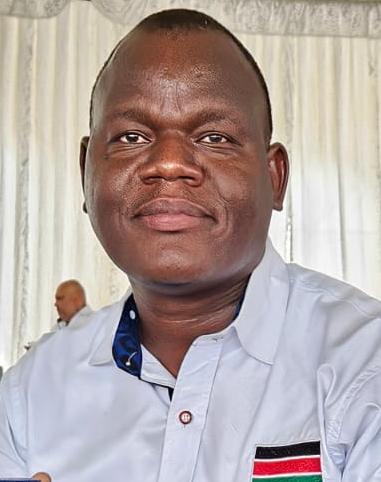
Mr Lotaruk Ekuam Nahashon, HSC
Regional Coordinator
"From Lodwar to the borders of the Ateker region, our office exists to ensure that equality and inclusion are built in from the start, for every community we serve."
Latest News
.JPG)
Other Regional Offices
Find NGEC regional presence near you
