Refugee, asylum-seeking, stateless and migrant children could be shut out of free basic education under the Basic Education Bill, 2026, the National Gender and Equality Commission (NGEC) has warned.
Clause 11(2) of the Bill permits tuition charges for non-citizens. The Commission notes that Article 53(1)(b) of the Constitution guarantees free and compulsory basic education to every child, and proposes that the guarantee apply “to every child irrespective of citizenship or immigration status.”
CHARGES AND EXCLUSION
Clause 12(3) already prohibits barring a child from attending school for non-payment. The Commission proposes going further: an approved charge should never be enforced by excluding a child from instruction, assessment, transition or learning materials, and every school should provide a confidential procedure for waivers or financial assistance where a parent or guardian cannot pay.
DOCUMENTS AS BARRIERS
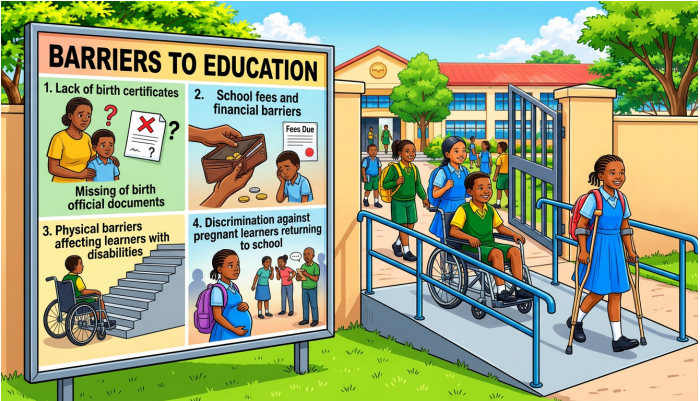
The Bill protects children who cannot prove their age. The Commission warns that other documents and database numbers may create further barriers for marginalised or displaced families, and proposes a new clause 13(9).
"Lack of a birth certificate, national identification document, disability registration certificate or education management information system number shall not prevent a child’s admission or continued attendance.” NGEC memorandum on the Basic Education Bill, 2026
Under the proposal, the head of the institution would assist with verification and registration. The Commission also asks that the right to challenge a refusal of admission extend to private schools, and to learners and authorised representatives as well as parents.
It proposes that single-sex schools may continue to admit learners of one sex, while registration as a special school should not authorise discrimination on the basis of disability.
OLDER AND MARGINALISED LEARNERS
The memorandum asks the Cabinet Secretary to provide accessible adult and continuing education through flexible schedules, assisted offline enrolment, appropriate languages and learning materials, and reasonable accommodation, with no eligible adult excluded solely because of age.
For nomadic, indigenous, remote and other marginalised communities, it proposes that the responsible Council plan its programmes with representatives of the communities served, publish annual targets for enrolment, retention and completion, and provide mobile schooling, school feeding, safe access and culturally responsive learning. The Commission cites Article 56, which requires affirmative action for minorities and marginalized groups.