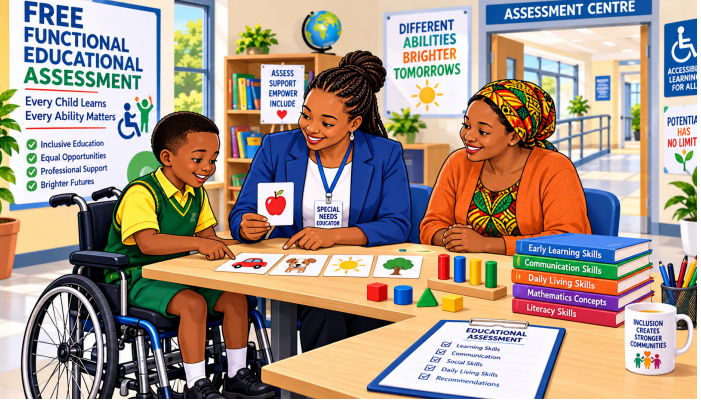
The National Gender and Equality Commission (NGEC) has proposed that public assessment and resource centres provide functional assessment to learners with disabilities free of charge and without delay.
Its proposed clause 55(3) of the Basic Education Bill, 2026 reads: “Public assessment and resource centres shall provide timely, accessible functional assessment and referrals without charge; assessment shall not be a precondition for admission or urgent support.”
THE EVIDENCE BEHIND IT
The proposal follows the Commission’s own findings. Its October 2026 report, Reimagining Inclusive Education under the Competency-Based Education Framework, found that many Grade 10 learners with disabilities arrived in senior school without assessment reports, leaving schools to assess them after admission. At Lenana School, 118 learners with diverse disabilities had been placed in a school without the facilities and specialised staff to support them.
The memorandum states that free functional assessment prevents poverty from becoming an additional barrier.
"The amendment preserves individual assessment and specialized support while preventing automatic segregation or delay pending diagnosis.” NGEC memorandum on the Basic Education Bill, 2026
INCLUSION IN GENERAL SCHOOLS
The Commission proposes a new clause 49(6): no learner shall be excluded from a general education institution solely on the basis of disability. Placement would follow an individual assessment, consider the views of the learner and the parent or guardian, provide reasonable accommodation and support, be reviewed periodically, and not rest solely on a diagnostic category.
ACCESSIBLE BY LAW
The memorandum asks that a school be registered only if it complies with prescribed physical, communication and digital accessibility standards and has arrangements for reasonable accommodation. It seeks identified budget lines for accessible infrastructure, assistive technology, individualised support, specialist personnel and outreach assessment services, so that families are not left to purchase essential support.
It also proposes new definitions. Special needs education would mean education and individualised support adapted to a learner’s requirements arising from disability, learning differences or giftedness and talent, avoiding definitions of learners by impairment. Integrated schools would be those in which learners with and without disabilities learn together with appropriate support.
The Commission grounds the proposals in Articles 27, 53(2) and 54 of the Constitution and section 20 of the Persons with Disabilities Act, 2025.