The National Gender and Equality Commission (NGEC) has asked Parliament to apply the two-thirds gender principle to the boards and councils created under three education Bills.
In the Basic Education Bill, 2026, the Commission proposes replacing the reference to “the principle of gender equity” in clause 32(2) with the requirement that not more than two-thirds of members are of the same gender.
SCHOOL BOARDS
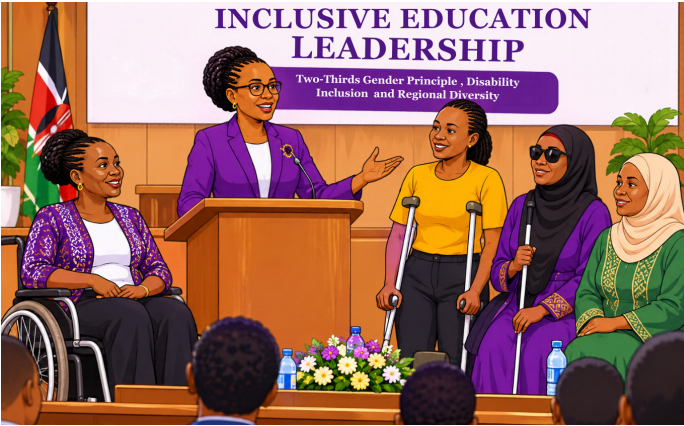
Boards would also reflect the community served and provide for the participation of persons with disabilities. The memorandum fills a gap in the composition of boards for special schools, adult learning and multipurpose institutions, proposes that at least one member appointed to the responsible Council be a person with a disability, and that members representing marginalised communities be drawn from those communities through an open, accessible nomination process.
ASSESSMENT AND TEACHER EDUCATION
For the Kenya National Educational Assessments Council, the Commission proposes that the reserved disability-interest seat be filled by a person with a disability, nominated through an accessible process involving representative organisations of persons with disabilities. Appointments would meet the two-thirds principle and reflect regional and ethnic diversity, with due consideration to minorities and marginalised groups.
"Appointment and nomination to a Board of Management shall ensure that not more than two-thirds of its members are of the same gender.” NGEC memorandum on the Basic Education Bill, 2026
For the boards established under the Pre-Service Education and In-Service Training Bill, it proposes the same gender and diversity requirements and at least one member who is a person with a disability.
A member could be removed for incapacity only after an individual assessment found them unable to perform essential duties despite reasonable accommodation, and only after written notice, a hearing and written reasons.
THE CONSTITUTIONAL BASIS
The memoranda cite Articles 27(8), 54(2), 56 and 232 of the Constitution on gender balance, disability representation, the participation of minorities and the values of public service. The Commission’s Teachers of Kenya audit shows how far representation still has to go: teachers with disabilities make up 1.7 per cent of all TSC-employed teachers, against a five per cent threshold.