The National Gender and Equality Commission (NGEC) has called for a stronger focus on institutional accountability, compliance and enforcement to advance women’s political participation ahead of the 2027 General Election.
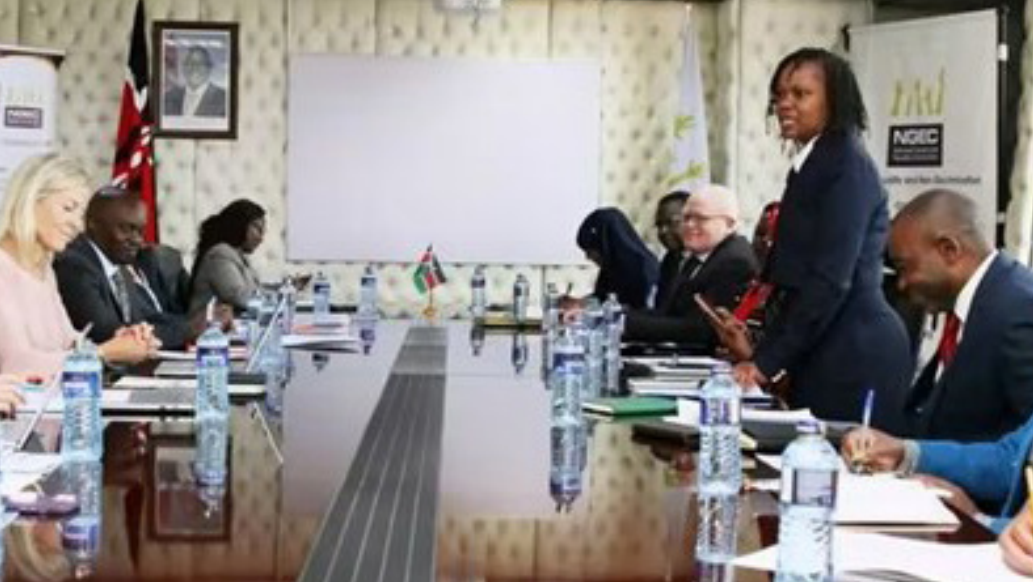
The call was made on 29 September 2026, when the Commission hosted the UN Women Strategic Partnership Framework (SPF III) Programme Monitoring Mission for East and Southern Africa for a high-level roundtable on women’s political participation, inclusive governance and peaceful elections.
The forum brought together the monitoring mission, senior representatives of UN Women, the Swedish International Development Cooperation Agency, the Norwegian Agency for Development Cooperation, Members of Parliament, Commissioners and Secretariat of NGEC, and representatives of the County Assembly Forum and the National Steering Committee on Peacebuilding and Conflict Management. Hon. Beatrice Elachi, Vice-Chairperson of the Kenya Women Parliamentary Association, was present.
THE 2022 RECORD
In the 2022 General Election women won 29 of the 290 constituency seats in the National Assembly and 115 of the 1,450 ward seats. Seven women were elected governors. The Chairperson, Hon. Rehema Jaldesa, said the figures demonstrate both progress and the continuing structural barriers to women’s participation in open electoral competition.
The Commission is concerned about the barriers created by political party nomination processes, the cost of political campaigns, violence against women in politics, and the continued absence of legislation to fully operationalise the constitutional two-thirds gender principle. Jaldesa also identified technology-facilitated gender-based violence as an emerging threat.
Online abuse can silence women, undermine their public participation and discourage prospective candidates from entering political competition.
WHAT PARTNERS WERE ASKED
The Commission has commenced joint work with the Office of the Registrar of Political Parties to audit political parties, including their nomination rules and practices, ahead of the nomination period.
It will also undertake gender-responsive monitoring of the electoral process over the coming months, mobilise support at ward level, advocate for an electoral security framework that protects women candidates, and continue engaging Parliament and the Executive.
It will further discharge its reporting obligations under the Convention on the Elimination of All Forms of Discrimination against Women, the Commission on the Status of Women and the Maputo Protocol. Jaldesa called for continued multi-year support across the 2027 electoral cycle, beginning in the 2026/2027 financial year, and urged partners to involve the Commission at the design stage of joint programmes so that its constitutional monitoring and audit functions are integrated from the outset.
She noted that the partnership with UN Women dates back to the establishment of the Commission, when UN Women, then UNIFEM, supported the development of its first strategic plan, institutional infrastructure and technical capacity.
.JPG)