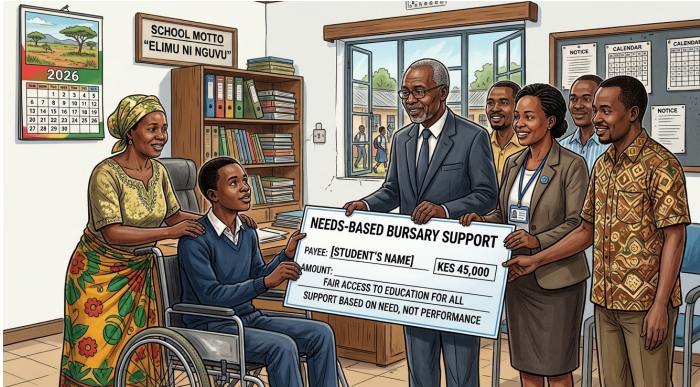
The National Gender and Equality Commission (NGEC) has proposed that need-based bursaries under the Basic Education Bill, 2026 assess household means and disability-related, transport, boarding and care costs, without regard to academic rank.
The memorandum notes that the Bill distinguishes scholarships from need-based bursaries, and seeks to protect that distinction. A partial award from another source would not, by itself, disqualify a learner with an unmet need.
REASONS AND REVIEW
Every unsuccessful applicant would receive reasons and could seek an accessible review by an officer not involved in the initial decision, determined within thirty days.
Clause 72(4) restricts publicly funded awards to public schools. The Commission proposes a narrow, verified exception: public awards would prioritise learners in public institutions, but could support a learner in a registered non-public institution where no reasonably accessible public institution can provide the required education or disability support. Eligibility and costs would be verified against published criteria. The memorandum cites Articles 27(6) and (7), 43, 47, 53 and 54.
"Absence or error in a database entry shall not alone deny admission, capitation, an assessment opportunity or otherwise established eligibility for assistance.” NGEC memorandum on the Basic Education Bill, 2026
DATA THAT COUNTS EVERYONE
The registers created under the Bill hold children’s family details, disability information and financial vulnerability. The Commission proposes that their processing comply with the Data Protection Act, with lawful purposes, minimum necessary data, authorised access, retention periods and accessible correction procedures.
The bursary report would include anonymised award and unmet-need data disaggregated by sex, age, disability and location, where lawful and relevant. The memorandum says anonymised reporting reveals whether support reaches disadvantaged groups without publishing identifiable beneficiary lists.
The proposal answers a gap the Commission has documented. In its assessment of Grade 10 placement, none of the seven schools assessed reported learners with disabilities by sex, so the system could not see whether girls and boys with disabilities were treated equally.