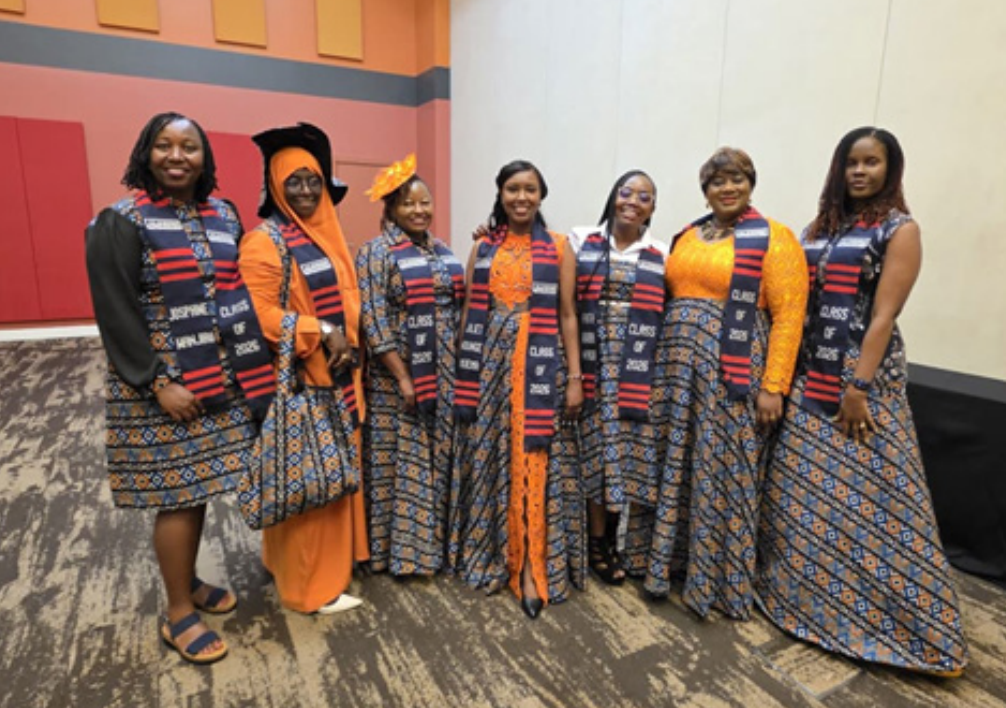
Two officers of the National Gender and Equality Commission (NGEC) have completed the African Leadership University (ALU) Public Sector Fellowship, graduating at a convocation in Kigali, Rwanda, on 25 September 2026.
The fellowship ran from February to September 2026 and brought together 36 fellows from 18 African countries, six of them from Kenya. It combined intensive sessions in Botswana, Senegal and Rwanda with practical assignments, peer learning and coaching designed to strengthen leadership and problem-solving in public institutions.
The training bears directly on how the Commission delivers its mandate. Under section 8 of the National Gender and Equality Commission Act, 2011, NGEC promotes gender equality and freedom from discrimination in accordance with Article 27 of the Constitution. It also monitors, facilitates and advises on the integration of the principles of equality and freedom from discrimination in all national and county policies, laws and administrative regulations, in public and private institutions alike.
WHAT FELLOWS STUDIED
The programme comprised two courses. Leadership Lab, supported by executive coaching, covered leading self, leading others and leading organisations. Fellows worked on ethical judgement, courage, resilience, empathy, developing others, building trust and forming effective, diverse teams. The course also addressed shared vision, strategic change, stakeholder engagement, managing resistance, storytelling and networks.
Product Management, supported by product coaching, focused on understanding citizens’ needs, framing problems and solutions, testing assumptions and refining responses. Fellows learnt to turn ideas into practical proposals that account for implementation, sustainability and measurable public value.
Central lessons included listening before designing interventions, combining empathy with accountability, developing staff through coaching and delegation, and building commitment across institutions. The programme emphasised using evidence and feedback to improve services, and measuring success by changes in people’s lives as well as by completed activities.
RELEVANCE TO THE MANDATE
Each of these lessons corresponds to a part of the Commission’s work. Listening before designing interventions is the starting point for engagement with the special interest groups the Commission serves, including women, youth, children, persons with disabilities, and minority and marginalised communities, whose needs differ from one group to another and call for distinct responses.
Measuring change in people’s lives strengthens the Commission’s monitoring and audit functions, where compliance is ultimately judged by whether institutions deliver equal treatment and opportunity in practice. Stakeholder engagement and managing resistance sit at the centre of the Commission’s advisory role, because progress on equality depends on national and county institutions that must implement reforms themselves.
The lessons also reflect the values and principles of public service under Article 232 of the Constitution, which require responsive, effective, impartial and equitable provision of services and the involvement of the people in policy-making. Coaching and delegation give the two officers practical tools to build capability within their own teams. The fellowship has also opened avenues for continued collaboration and learning with public sector professionals across Africa.
.JPG)