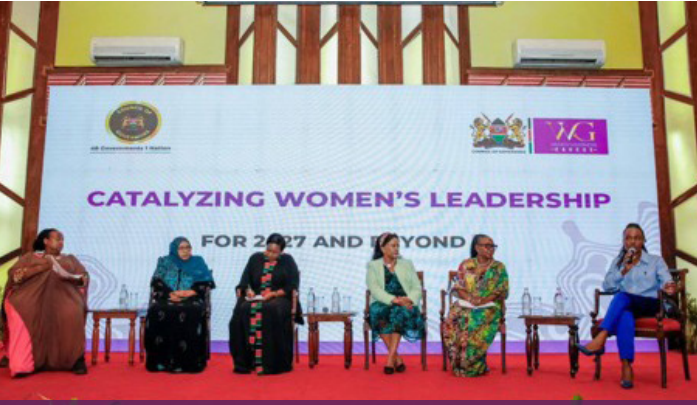
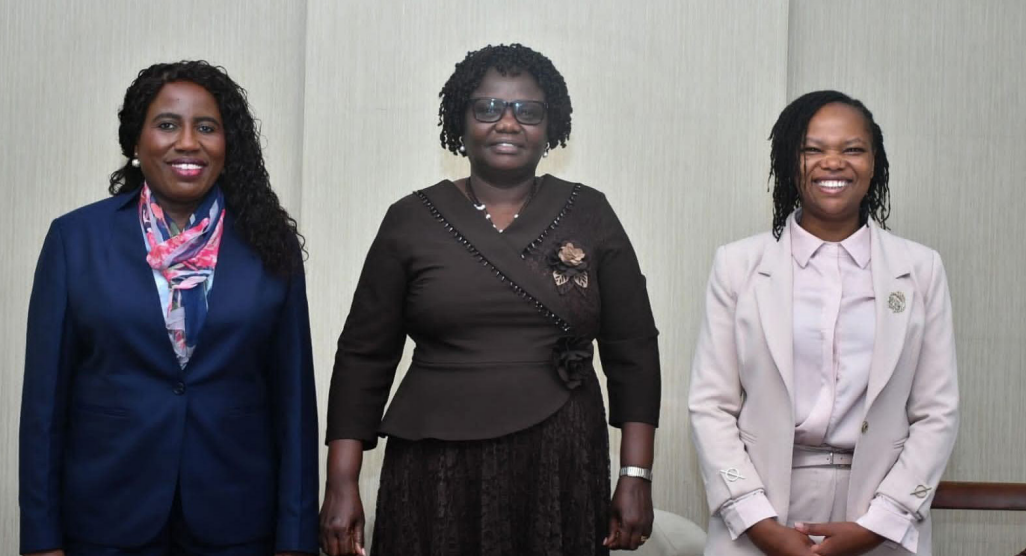
Commission Secretary and Chief Executive Officer Purity Ngina joined regional leaders, policymakers and education stakeholders as a panellist at the 2nd East African Community Regional Education Conference, where discussion turned to what it will take to convert regional commitments on inclusive education into changes learners can see in their own classrooms.
The gap under examination is familiar to any parent of a learner with a disability. A place on the register is not a place in the lesson. A ramp that stops at a doorway, a teacher with no training in sign language, a textbook available only in print, a laboratory on an upper floor of a building without a lift: each of these turns admission into a formality and leaves the learner to fail quietly.
The panel examined what inclusion requires in practice. Accessible infrastructure. Teachers trained and supported to teach diverse classes. Inclusive curricula and learning materials. Reasonable accommodation, assistive technologies,and financing sufficient to sustain all of them. Where reasonable accommodation is not budgeted, inclusion policy stops at the level of intention.
Delegates also considered the barriers that fall on particular groups of learners: children and young people with disabilities, girls and young women, learners from minority and marginalised communities, learners living in poverty, and those in remote or underserved areas. These barriers compound. A girl with a disability in an underserved area meets all three at once, and support designed for only one of them will not reach her. Hon. Beatrice Askul Moe, Cabinet Secretary for East African Community Affairs, attended as chief guest, accompanied by Dr Beatrice Inyangala, Principal Secretary, State Department for Higher Education and Research.
For the Commission, the regional platform matters because exclusion in education is not confined by borders and neither are the remedies. Harmonised standards on accessibility, teacher preparation and disaggregated reporting allow member states to compare performance and to identify which approaches hold. Without common measures, each system reports its own success against its own definition.
As the East African Community pursues deeper integration, inclusive and equitable education remains a test of what integration is for. No learner should be left behind because of disability, gender, economic circumstance, location or identity. The measure of an education system is not how many learners it enrols, but whether every learner is welcomed, supported, respected and equipped to succeed.