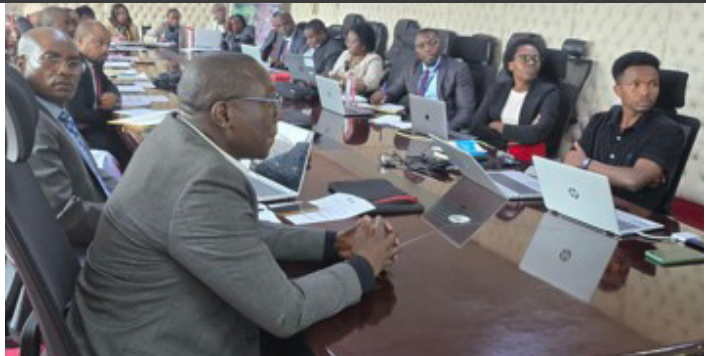
The National Gender and Equality Commission (NGEC) is hosting a multi-stakeholder coordination meeting to strengthen the frameworks by which communities in Kenya are recognised and classified.
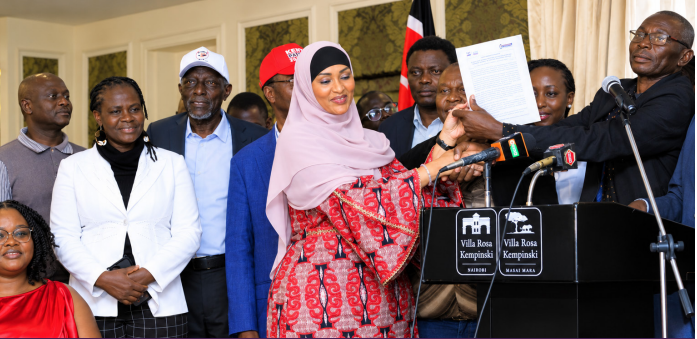
The meeting brings together senior technical representatives from national and county government institutions, constitutional commissions, statutory agencies, academia and civil society organisations.
They include the Commission on Administrative Justice, the Council of Governors, the National Treasury, the State Departments responsible for immigration and citizen services, justice, gender and affirmative action, devolution and education, the Office of the Attorney-General, the Public Service Commission, the Teachers Service Commission, Multimedia University of Kenya, the Kenya National Bureau of Statistics and the National Council for Population and Development.
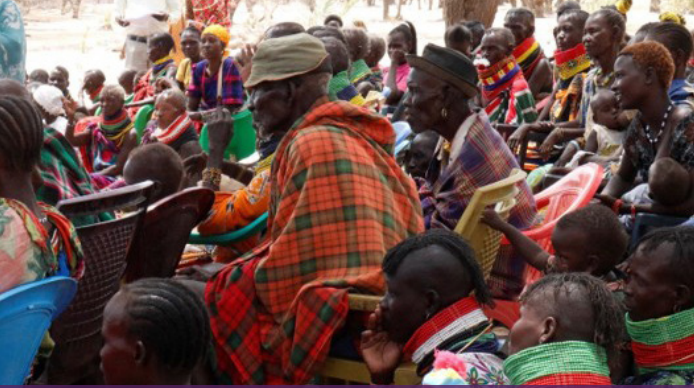
Civil society organisations representing minority, indigenous and marginalised communities are taking part, among them the Samburu Women Trust and the Ogiek Peoples’ Development Programme. The Commission holds that communities which experience exclusion must be represented in decisions concerning their identity, recognition and access to public services.
WHERE IT FAILS
Discussions are examining the administrative and legal barriers associated with community coding and classification across government databases. Where a community is absent, incorrectly classified or recorded differently across civil registration, national identification and public service systems, the consequences reach every dealing that community has with the State.
These inconsistencies can delay or prevent access to national identity documents, restrict participation in public employment, weaken representation in official statistics and exclude communities from affirmative action programmes and other public opportunities.
The Commission’s position is that an administrative coding problem becomes an equality and human rights concern.
TOWARDS A FRAMEWORK
The discussions are facilitated by the Kenya National Bureau of Statistics and are examining how government institutions can harmonise their standards, clarify their respective responsibilities and develop a step-by-step advisory framework for communities seeking formal recognition and coding.
Participants have been taken through the National Policy on Ethnic Minorities, Indigenous and Marginalised Communities, launched in 2025. The policy addresses historical marginalisation and the protection, participation and development of communities that have remained inadequately recognised within national systems.
The Commission holds that equitable planning depends on the accurate identification and counting of communities, and that harmonised coding and classification is necessary for inclusive national planning, the equitable distribution of resources, access to documentation, fair representation and the constitutional guarantees of equality and freedom from discrimination.
The Commission said stronger institutional coordination and community participation can establish a transparent and accessible recognition framework under which no community remains invisible within the systems designed to serve all citizens.