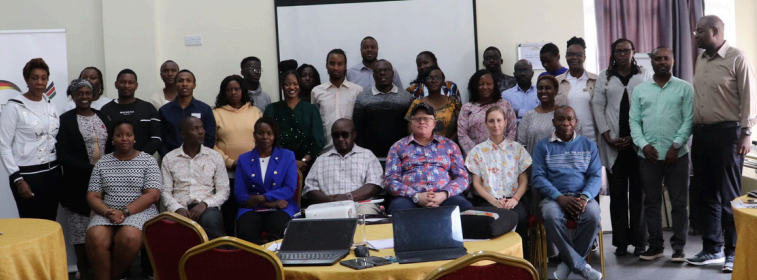
The National Gender and Equality Commission (NGEC), in partnership with the Deutsche Gesellschaft für Internationale Zusammenarbeit (GIZ) and with support from DevTransform, convened a three-day high-level workshop to shape the Kenya Action Plan on Inequality Reduction (KAPI). The workshop assembled technical officers from ministries, departments and agencies (MDAs), development partners and civil-society actors to align institutional priorities and cement ownership of a national roadmap to rebalance equity across sectors.
Against a backdrop of rising concern over entrenched disparities, the workshop focused on developing an actionable framework that addresses the structural drivers of inequality from gender gaps and disability exclusion to youth unemployment, weak social protection systems, and the marginalisation of ethnic and religious minorities. Organisers said the aim was not merely to draft policy language but to build a living plan with measurable targets, implementation modalities and clear accountability mechanisms.
The objective is simple but profound,” said Commissioner Nzomo during the Technical Working Group session. “Over the past days, we have made meaningful progress toward transforming evidence into action to tackle inequality in Kenya.
Reducing inequality remains a shared national responsibility, one that requires sustained collaboration across sectors and levels of government. Stakeholder contributions will play a vital role in ensuring that KAPI is practical, inclusive, and aligned with Kenya’s development priorities.”
The gathering gave technical officers space to interrogate data, test policy options and negotiate realistic pathways for translating national commitments into county-level interventions. Breakout sessions examined how to mainstream equality into budgeting and public services, strengthen social protection for people left furthest behind, and remove barriers that prevent women, persons with disabilities and marginalised youth from accessing education, employment and land.
Participants emphasised the importance of evidence based planning. Several ministries presented baseline studies and diagnostic reports that highlighted service gaps and regional disparities, while development partners outlined international best practices for monitoring, financing and multisectoral coordination. A recurring theme was the need to harmonise indicators across government systems so that progress on inequality can be tracked transparently and periodically.
The workshop emphasised that policy responses must reflect the multiple dimensions of disadvantage economic, geographic, gender-based, generational and ability-linked. Drawing on GIZ’s expertise in inequality diagnostics and distributional policy approaches, participants considered how Kenya might build institutional systems that monitor, report and act on inequality in a manner that spans departments rather than being confined to silos.