NAIROBI, Kenya — The true measure of a society is not how many people can access its services, buildings and opportunities, but how it treats those who cannot. For millions of persons with disabilities around the world, exclusion often begins long before they arrive at a government office, board a bus, visit a hospital, access a website or seek public services. It begins in the design of systems that were never built with them in mind.
As Kenya accelerates infrastructure development, embraces digital transformation and expands public services, accessibility is emerging as one of the defining governance and human rights questions of the modern era. Who benefits from development? Who is left behind? And how can governments ensure that progress is genuinely inclusive?
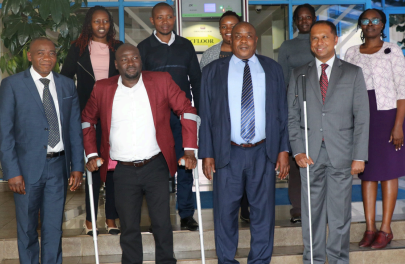
These questions formed the centrepiece of a high-level engagement between the National Gender and Equality Commission (NGEC) and a delegation from the United States Access Board led by Executive Director Dr. Sachin Dev Pavithran. The courtesy visit brought together two institutions united by a common goal: advancing accessibility as a cornerstone of equality, inclusion and effective governance.
Far from being a routine diplomatic engagement, the discussions reflected a growing global recognition that accessibility is no longer a specialised issue affecting a small segment of society. It is increasingly viewed as a fundamental development priority that influences education, employment, healthcare, mobility, political participation and economic growth.
During the engagement, NGEC presented its constitutional mandate of promoting equality and freedom from discrimination while protecting the rights and interests of Special Interest Groups.
The Commission highlighted its ongoing efforts to strengthen inclusive governance through gender mainstreaming, policy advisory services, monitoring compliance with equality standards and generating evidence to support decision-making across public institutions.
The meeting took place against a backdrop of growing international awareness that inaccessible environments continue to lock millions of people out of opportunities that many citizens take for granted.
According to global disability rights advocates, accessibility barriers remain among the most significant obstacles to social and economic participation. These barriers are often hidden in plain sight— stairs without ramps, websites incompatible with assistive technologies, public transport systems that cannot accommodate wheelchair users, information published without accessible formats, and public facilities designed without considering diverse user needs.
For persons with disabilities, such barriers can mean exclusion from education, limited employment opportunities, reduced access to healthcare and diminished participation in public life. The discussions therefore focused on practical solutions aimed at embedding accessibility into the heart of governance and development planning.
One of the strongest themes to emerge was the importance of accessible information and communication systems. In an era where governments increasingly rely on digital platforms to deliver services, accessibility is rapidly becoming a prerequisite for equal citizenship. Whether applying for services, accessing public information, participating in consultations or engaging with institutions, citizens increasingly depend on technology to interact with government.
The two institutions explored opportunities to strengthen accessible communication systems and promote digital platforms that can be used effectively by all citizens, including persons with visual, hearing and cognitive disabilities. The discussions recognised that digital exclusion risks becoming the new frontier of inequality if accessibility considerations are not integrated from the outset.
Physical accessibility and universal design also featured prominently in the deliberations. Universal design promotes the creation of environments that can be accessed and used by the widest possible range of people without requiring special adaptation. It shifts the conversation from accommodating disability after construction to designing inclusively from the beginning.
Stakeholders noted that inclusive infrastructure benefits not only persons with disabilities but also older persons, pregnant women, parents with young children and individuals facing temporary mobility challenges.
Both institutions acknowledged that achieving meaningful accessibility requires more than legislation. It demands expertise, innovation and continuous learning among policymakers, planners, architects, engineers, service providers and public administrators. The two institutions explored opportunities to collaborate in developing and piloting accessibility tools and solutions that could support inclusive service delivery across public institutions.
The engagement also examined the potential establishment of communities of practice to facilitate ongoing knowledge exchange among accessibility experts, practitioners and policymakers.