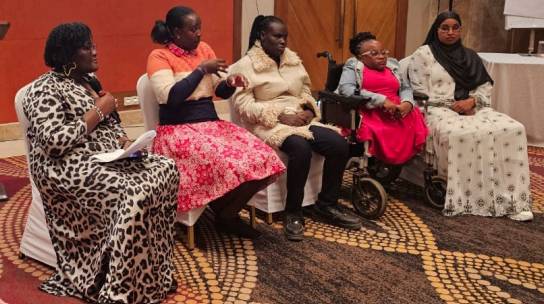
The hall was filled with determination and quiet courage as women and girls with disabilities shared their stories. Some spoke of being overlooked at polling stations, others of battling stigma in their own communities. Many recounted painful experiences of violence and exclusion. Yet through the testimonies ran a thread of resilience — a demand that Kenya’s democracy must make room for all its citizens.
The national dialogue, convened by the National Gender and Equality Commission (NGEC) in partnership with the Kenya Network of Women and Girls with Disabilities, gathered voices from across the country. It offered a platform for participants to speak directly about their lived realities — realities that expose the gap between the promises of the Constitution of Kenya 2010 and the daily experiences of marginalised women.
For many women with disabilities, discrimination comes twice over. Gender bias intersects with physical or sensory disability, creating obstacles to education, employment, political representation, and even access to justice.
At the heart of the dialogue were accounts of how these obstacles play out during elections. Polling stations often remain physically inaccessible. Campaign meetings rarely cater for persons using sign language or Braille. Social perceptions dismiss the political ambitions of women with disabilities as unrealistic.
The result is systematic exclusion, with women with disabilities underrepresented in national and county decision-making despite Article 54 of the Constitution, which guarantees them equal rights, and a requirement that at least five percent of public appointments include persons with disabilities.
The conversation also turned to the shadow of violence. Several participants described harrowing encounters with gender-based violence, and the difficulty of seeking redress. “Violence does not just break bones,” one survivor explained. “It breaks confidence. It silences voices. And for women with disabilities, the silence is deeper because the systems are not built for us.”
Although laws such as the Protection Against Domestic Violence Act (2015) exist, weak enforcement and inaccessible reporting mechanisms mean that many cases remain unreported or unresolved. For women with disabilities, the lack of interpreters, safe spaces, or tailored services only compounds the problem.
At the forum, NGEC Head of the Gender and Women Division John Nzioka pledged the Commission’s commitment to turn testimony into action. The Commission will continue working with partners to promote accessible political participation, strengthen survivor support systems, and build public education programmes that challenge stigma.