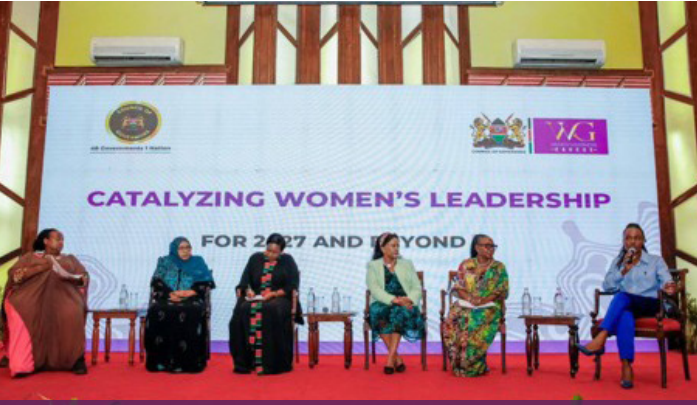

The National Gender and Equality Commission has conferred the Usawa Award on the Nairobi City County Government, hailing its efforts to embed gender equality and social inclusion into governance. The recognition underscores the county’s progress through deliberate policies such as the Gender Mainstreaming Policy, the Gender Guidelines for County Health Services, and a bold move to publish reports on gender actions – a practice that signals accountability and transparency.
Commission Chairperson Hon. Rehema Jaldesa described the honour as both a recognition and a responsibility. “Progress must not end with celebration. The work of equality is continuous, and the challenge now is to deepen it,” she noted during the presentation.
Among the achievements singled out were the county’s fight against sexual and gender-based violence through safe houses and the establishment of Tumaini Clinics for survivors. The flagship Dishi na County school feeding programme and menstrual health initiatives were also commended, with NGEC observing that such measures address not just health and education, but dignity and opportunity
For persons with disabilities, the county has taken steps toward improving accessibility, gradually introducing features that allow fairer participation in daily life. These measures, though partial, reflect a shift towards meeting obligations under Kenya’s Constitution and the Persons with Disabilities Act.
Yet even amid celebration, the Commission emphasized that the road ahead remains demanding. It called for the operationalization of a Centre of Excellence for survivors of gender based violence, inclusive disaster preparedness for communities repeatedly affected by floods, and stricter enforcement of accessibility standards in public buildings and transport systems. It further urged Nairobi to strengthen accountability by publishing a standalone Gender Equality and Social Inclusion Report, consolidating data across departments.
The Usawa Award – “usawa” meaning equality – is a marker of progress, but also a mirror held up to leadership. Nairobi has shown that inclusion is possible, that deliberate policy choices can shift the fortunes of entire communities. Yet the city also carries the weight of expectation. As the country’s capital, what Nairobi does sets the tone for all 46 other counties.
Nairobi’s challenge now is to prove that leadership in gender equality is not symbolic but systemic. That safe houses become center's of justice, that school meals become guarantees of opportunity, that ramps and accessible transport become the norm, not the exception.