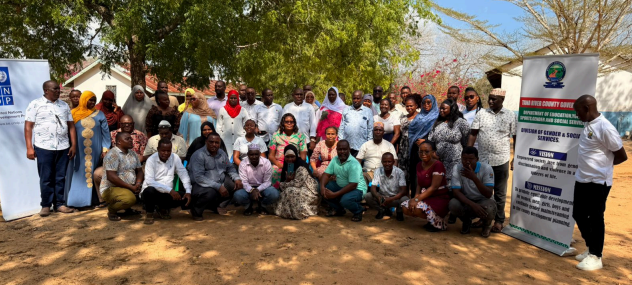
Staff at county offices in Tana River are stepping into a new era of awareness and accountability following a capacity‑building training on Gender-Based Violence (GBV) organised by the National Gender and Equality Commission (NGEC) — Malindi Regional Office, with support from the United Nations Development Programme (UNDP) under the Advancing Food Systems Resilience in Kenya Project. The training, held at YMCA Minjila in Tana Delta Sub‑County, brought together a crosssection of county personnel to strengthen prevention and response mechanisms, with attention to safe, inclusive workplaces and socio‑economic empowerment.
Gender‑based violence is often seen through the lens of the home or community, yet workplaces — both public and private — are not immune to harassment, discrimination, or abuse. Institutions such as universities in Kenya have documented widespread under‑reporting of GBV due to fear of retaliation, stigma, or professional disadvantages.
Participants explored the many forms GBV can take — physical, emotional, sexual, economic, and institutional — and discussed how to recognise and respond appropriately. The sessions covered legal and policy frameworks, obligations under national GBV laws, referral pathways for survivors, survivor‑centred support, and the importance of confidentiality and institutional accountability.
Practical workshops helped staff understand their responsibility not only as duty‑bearers but also as guardians of safe workplace environments; this included establishing clear reporting channels, promoting equal participation in leadership regardless of gender, and supporting socio‑economic empowerment through inclusive employment practices.
The training takes on added significance given its link to the broader UNDP food‑systems resilience project. In counties like Tana River — hard hit by climate change, displacement, and economic instability — gender‑sensitive governance, inclusive employment, and protection from violence are vital to social cohesion and development.
Research shows that addressing GBV is not merely a matter of human rights or justice; it affects productivity, retention, community trust, and economic participation. By empowering county staff to recognise and respond to GBV, the training contributes to building institutions that can withstand social stressors and deliver services equitably.
Participants committed to reviewing and reinforcing workplace policies on GBV, ensuring reporting and referral systems, promoting gender‑balanced leadership, and fostering safe, inclusive working environments. By investing in capacity building for county staff, NGEC is setting a standard for accountability and safe working environments that can ripple across Kenya’s public service and beyond