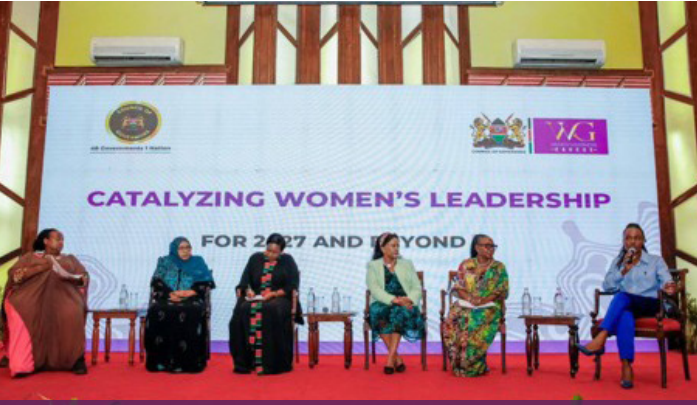
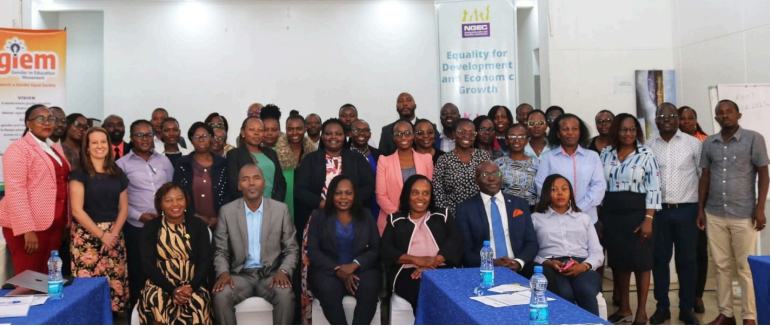
NAIROBI, Kenya — The National Gender and Equality Commission (NGEC), in collaboration with GIEM, Girl Child Network, government agencies, and development partners, launched a two-day capacity-building workshop aimed at strengthening gender-responsive and inclusive budgeting in Kenya.
The training, which commenced yesterday, brings together key stakeholders drawn from national and county governments, civil society organisations, and gender equality advocates, in a coordinated effort to enhance equity, accountability, and inclusivity in public financial management.
The initiative aligns with Kenya’s constitutional commitment to equality and non-discrimination, as well as global frameworks such as the Sustainable Development Goals (SDGs), particularly Goal 5 on gender equality and Goal 10 on reducing inequalities.
The workshop focused on strengthening understanding of gender mainstreaming across the entire budget cycle from planning and formulation to implementation, monitoring, and evaluation.
Gender-responsive budgeting (GRB) is widely recognised as a strategic public finance approach that integrates gender considerations into fiscal policy decisions, ensuring that government budgets respond equitably to the diverse needs of women, men, girls, boys, and other marginalised groups.
According to established public finance and gender equality frameworks, GRB does not imply the creation of separate budgets for women, but rather the systematic analysis of how budgetary allocations and revenue policies impact different population groups. This approach enables governments to identify and correct structural inequalities embedded within resource distribution systems.
Participants were taken through practical approaches to embedding gender analysis within programme-based budgeting systems, with emphasis on ensuring that public expenditure aligns with national equality commitments and development priorities. A key highlight of the discussions was the importance of strengthening accountability mechanisms in public budgeting processes.
Stakeholders noted that while Kenya has made significant progress in adopting programme-based budgeting reforms, gaps persist between policy commitments and actual resource allocations, often limiting the effective implementation of gender equality objectives.
Experts emphasised that gender-responsive budgeting enhances transparency and accountability by requiring sexdisaggregated data, participatory planning, and monitoring systems that track the differential impact of public expenditure on various groups.
Global and regional evidence shows that such approaches improve governance outcomes by making budget decisions more responsive to lived realities, particularly for vulnerable and marginalised populations.
The workshop further underscored the need to bridge the gap between policy frameworks and budget implementation.
Despite strong constitutional provisions and institutional mandates for equality in Kenya, challenges remain in translating these commitments into adequately funded programmes that directly address inequalities affecting women, youth, persons with disabilities, children, and older persons. Participants highlighted the importance of strengthening institutional coordination between planning units, treasury functions, and sector ministries to ensure that gender equality priorities are fully integrated into national and county budgeting processes.
The collaboration between NGEC, GIEM, Girl Child Network, and government agencies reflects a growing recognition that advancing gender responsive budgeting requires multi-sectoral partnerships.
Civil society organisations play a critical role in advocacy, capacity building, and monitoring budget implementation, while government institutions provide the policy and regulatory frameworks necessary for institutionalising inclusive budgeting practices.