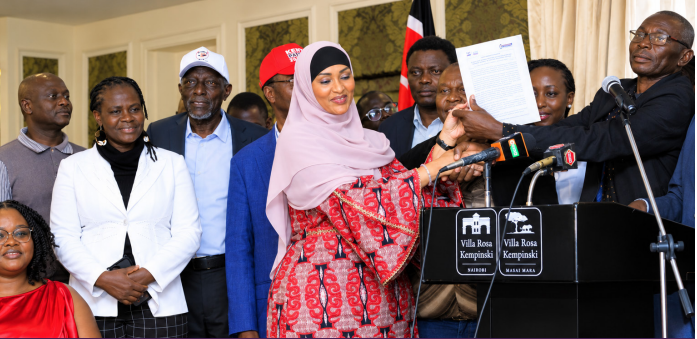
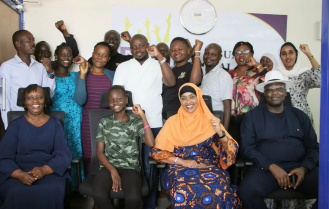
The Chairperson met with Ms. Beatrice Odongo, County CEC Member for Sports, Culture, Gender, and Youth, alongside other county officials. The discussions focused on the collective responsibility to address Gender-Based Violence (GBV), eliminate retrogressive cultural practices, promote youth empowerment, and advance political tolerance — particularly for women, youth, and persons with disabilities. The engagement reinforced the importance of inclusive public services, ensuring that national and county offices are accessible and responsive to all Kenyans, including persons with disabilities.
At the Registrar of Political Parties’ Kisumu Office, Chairperson Jaldesa emphasised the need to expand political space for Special Interest Groups (SIGs) in elective processes across Nyanza. She highlighted the critical role political parties play in identifying, resourcing, and elevating women, youth, and persons with disabilities to ensure inclusive governance. “Inclusive political participation is the cornerstone of a truly representative democracy,” the Chairperson noted.
Further engagements with FIDA Kenya and the Electoral Law and Governance Institute for Africa (ELGIA) deepened collaborative efforts to strengthen justice, accountability, and inclusive governance mechanisms across the county.
The Commission also convened civil society organisations, justice actors, and multi-sectoral partners at the Kisumu Regional Office to advance the Sexual and Gender-Based Violence (SGBV) Data Management Protocol. Reliable and coordinated data is essential for effective prevention, timely response, and survivor-centred care.
Engagements focused on harmonising case management systems, strengthening referral pathways, and safeguarding survivor confidentiality. Participants explored ways to enhance the tracking of outcomes and resource allocation, thereby improving the efficiency of health, justice, and psychosocial support services.
International research underscores the importance of multi-sectoral collaboration in GBV response. Studies by UN Women and UNFPA show that survivor-centred approaches significantly improve reporting rates, reduce secondary victimisation, and foster community trust in justice systems. By aligning local practices with these principles, Kisumu County can serve as a model for integrated SGBV response nationwide.
The engagement with these partners is particularly critical in Kisumu, where young people and marginalized communities often face structural barriers to participation. Civil society interventions provide mentorship, advocacy, and capacitybuilding opportunities that complement government initiatives, ensuring a holistic approach to empowerment.
Throughout the visits, the Commission underscored the importance of inclusive design and accessibility in public offices at both national and county levels. Persons with disabilities, women, youth, and other marginalized groups must be able to access government services with dignity and ease. The integration of accessibility measures and inclusive policies in office infrastructure, digital platforms, and service delivery mechanisms remains a strategic priority for the Commission.
Chairperson Jaldesa’s Kisumu visit highlights NGEC’s strategic focus on fostering systemic inclusion, enhancing youth participation, and strengthening survivor-centred GBV mechanisms. By engaging with government leaders, civil society, and justice actors, the Commission aims to translate the principles of equality and nondiscrimination into tangible, sustainable outcomes for all Kenyans.