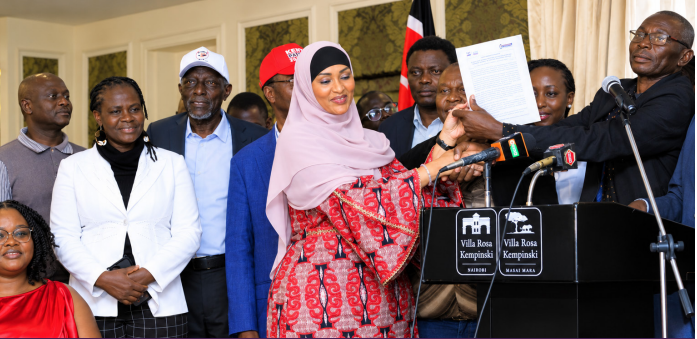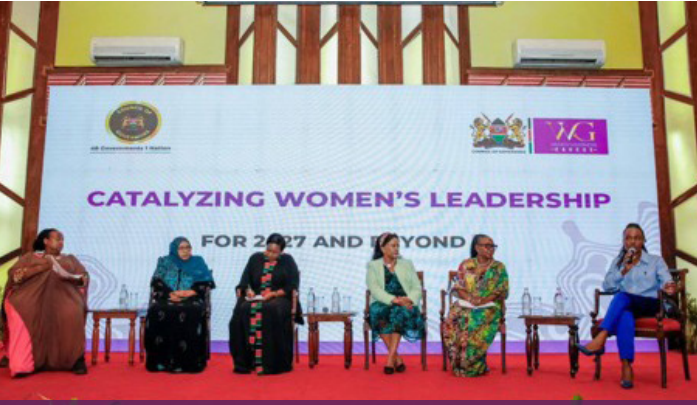
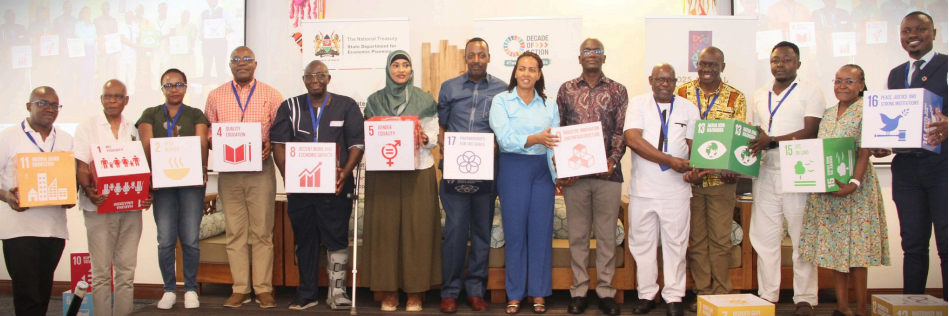
As Kenya charts its course toward the global Sustainable Development Goals, the 2025 National Multi-Stakeholders SDGs Conference under the banner “Race to 2030: Partnership, Collaboration and Innovative Financing” offered more than ambition — it provided a moment of accountability. Representing the National Gender and Equality Commission (NGEC), Chairperson Rehema Jaldesa stood before a gathering of policymakers, development partners and civil society to reaffirm that Kenya’s progress depends on one fundamental principle: no one must be left behind.
Jaldesa emphasised that achieving the SDGs in Kenya demands an inclusive and equitable development agenda — one built on constitutional values of equality, non-discrimination and meaningful participation for all, including women, persons with disabilities, youth, older persons, minorities, and marginalised communities.
A central concern in NGEC’s intervention was the disproportionate burden of unpaid domestic and care work carried by women — a vital yet underrated component of Kenya’s economy and social fabric. Recent data show women spend on average nearly five times more time than men on unpaid care and domestic duties.
Across the country, women’s unpaid labour has been valued at an estimated KSh 2.24 trillion annually, roughly 23.1 percent of Kenya’s GDP.
At the conference, Jaldesa urged stakeholders to acknowledge this “hidden engine” — and to respond with concrete policies. She called for genderresponsive budgeting that would channel public resources into care infrastructure, social protection, and services that reduce time burdens and create opportunities for women to engage more fully in economic and public life. “When care work counts, so do women,” she asserted — a reminder that justice, growth and equality are interlinked.
The Commission’s remit, Jaldesa noted, extends to all Special Interest Groups. She underscored the urgency of advancing accessibility and inclusive programming for persons with disabilities — ensuring that as Kenya modernises, no citizen is left out of development gains.
The SDGs conference, she argued, must not only measure progress in broad indicators, but also track equity: how services reach persons with disabilities, how youth and marginalised communities access opportunities, and how older persons are engaged in inclusive growth strategies. This multi-layered approach, she highlighted, reflects Kenya’s constitutional commitment to dignity, equality and the right to participate for every citizen.
As digital transformation accelerates, NGEC raised a cautionary note: innovation must be ethical, inclusive, and human-centred. Jaldesa called on partners to design and deploy artificial intelligence (AI) and other technologies in ways that expand access — not reinforce exclusion.
“Technology should widen opportunity, not deepen inequality,” she urged. She argued that AI strategies must be evaluated for fairness, data bias, accessibility, and equal benefit — especially for women, persons with disabilities, and historically marginalised communities. Such a call resonates globally, as nations grapple with the promise and peril of technological change. For Kenya, it is a reminder that development must remain anchored in human dignity and inclusion.
The timing of the SDG conference converged with the global 16 Days of Activism against gender-based violence — a period when the fight for equality and human rights gains renewed urgency.
Hon. Jaldesa framed the two as inseparable: sustainable development cannot be realised without eliminating inequalities, safeguarding human dignity, and ensuring safety, accessibility, and opportunity for all.