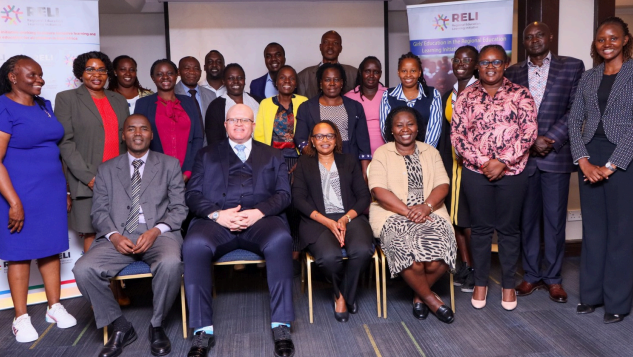
Efforts to strengthen girls’ education in Kenya received a significant boost after the National Gender and Equality Commission (NGEC), in partnership with RELI Africa, convened a high-level policy roundtable on advancing girls’ education at the Heron Portico Hotel in Nairobi.
The meeting brought together senior representatives from government ministries, education agencies, and development partners to deliberate on practical policy interventions aimed at creating equitable, inclusive, and safe learning environments for girls aged between 12 and 17.
The discussions centred on ways to enhance gender-responsive budgeting, promote school safety, and embed inclusive teaching methods within the education system. Participants explored how national and county governments could align existing policies and resources to better address the barriers that continue to hinder girls’ participation and performance in school.
Speaking during the session, NGEC Commissioner Nzomo Mbithuka underscored the urgent need to place girls at the centre of education reforms He emphasised that sustainable progress in education requires deliberate investment in policies that prioritise the needs of girls.
“Girls’ education is not merely a social cause; it is an economic and human rights imperative,” said Commissioner Mbithuka. “For Kenya to achieve true gender equality, we must ensure that our policies, budgets, and institutions actively safeguard every girl’s right to learn and to thrive in safe environments.”
The RELI Africa Girls’ Education Project, under which the roundtable was held, seeks to complement national efforts towards achieving gender equality and universal education. The project focuses on translating evidence into policy action and promoting accountability for equitable learning outcomes across the region.
During the meeting, participants acknowledged the critical role of gender-responsive budgeting in ensuring that resources are allocated to initiatives that directly support girls — including the provision of sanitary products, mentorship programmes, and safe learning spaces. They also called for improved coordination between education agencies and the implementation of inclusive teaching practices that respond to the diverse needs of learners.
RELI Africa commended the Commission’s leadership, emphasizing collective action and policy coherence for meaningful change.