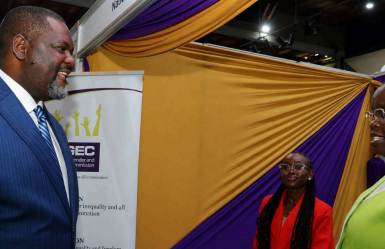
NAIROBI, Kenya — Public awareness on equality, inclusion and constitutional rights featured prominently during the Africa Public Service Day (APSD) 2026 celebrations, with hundreds of visitors engaging the National Gender and Equality Commission (NGEC) at its exhibition booth during the two-day event held at the Kenyatta International Convention Centre (KICC).
The celebrations, which brought together national and county government institutions, development partners, the private sector, academia, civil society organisations and members of the public, were held under the African Union theme, "Enhancing Public Sector Institutions and Empowering Multi-stakeholder Partnerships to Achieve Universal Water Availability and Safe Sanitation by 2063." The event provided a platform for public institutions to showcase innovations, strengthen citizen engagement and promote responsive public service delivery in line with Agenda 2063.
Speaking during the opening of the celebrations, Cabinet Secretary for Public Service, Human Capital Development and Special Programmes, Geoffrey Ruku, said access to safe water and sanitation remains fundamental to sustainable development, public health, food security, industrial growth and social equity. He emphasized that strong public institutions and effective partnerships are essential to delivering quality public services and achieving the aspirations of the African Union's Agenda 2063.
Against this backdrop, the Commission used the national event to strengthen public understanding of its constitutional mandate to promote equality and freedom from discrimination.
Through its exhibition booth, Commission officers engaged visitors on the institution's role in safeguarding the rights of Special Interest Groups, including women, children, youth, persons with disabilities, older persons, minorities and marginalized communities.
Members of the public received information on the Commission's constitutional functions, ongoing programmes, complaints and redress mechanisms, policy advocacy initiatives and partnerships aimed at advancing inclusive governance and equal access to opportunities. The engagement also enabled citizens to seek clarification on issues relating to discrimination, affirmative action, public participation and constitutional protections available to vulnerable populations.
Throughout the two-day exhibition, visitors engaged Commission officials through questions, consultations and discussions on equality and human rights issues affecting communities across the country. The interactions provided valuable feedback on emerging concerns while creating opportunities to raise awareness of legal and policy frameworks that promote inclusion and protect individuals from discrimination.
The public engagement also demonstrated the growing importance of citizen participation in strengthening public institutions.
By providing direct access to information and institutional services, the exhibition enabled members of the public to better understand the Commission's oversight role and the avenues available for promoting accountability and protecting constitutional rights.
For the Commission, participation in Africa Public Service Day aligns with its constitutional mandate to promote equality, monitor compliance with constitutional principles on inclusion and advise State organs on measures that eliminate discrimination.
Public exhibitions and outreach initiatives remain an important component of this mandate by bringing constitutional commissions closer to citizens and encouraging greater public participation in governance.
The event further highlighted the role of public institutions in promoting accessible, transparent and citizen-centred service delivery. By engaging directly with the public, the Commission reinforced the importance of continuous dialogue in building awareness of constitutional rights and ensuring that government institutions remain responsive to the diverse needs of all Kenyans.
As Africa Public Service Day 2026 drew to a close, the strong public interest witnessed at the Commission's exhibition underscored the growing demand for information on equality, inclusion and human rights.
The engagement reflected the value of sustained interaction between public institutions and citizens in strengthening accountability, expanding access to public information and advancing Kenya's constitutional commitment to equality, inclusion and freedom from discrimination.