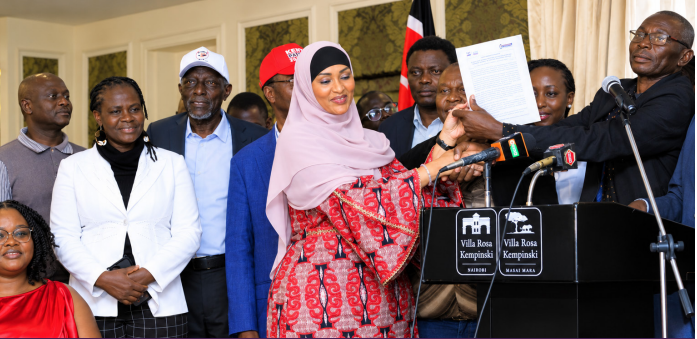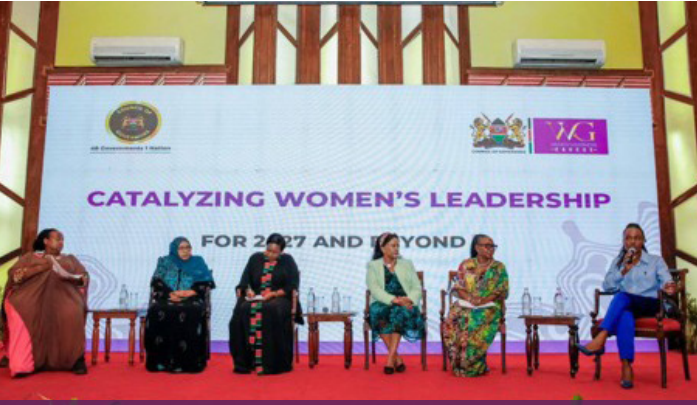
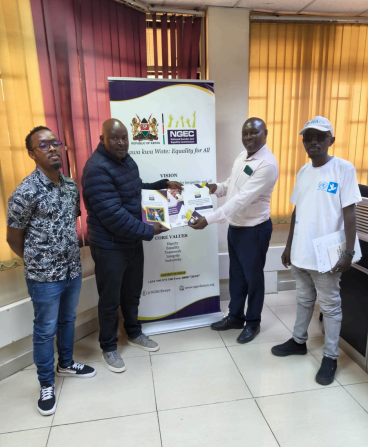
The National Gender and Equality Commission’s Nakuru Regional Office hosted officials from the International Family Pageant Global Advocates of Peace Flag in Nakuru for a strategic engagement focused on strengthening collaboration in peacebuilding, gender equality and social inclusion. The meeting brought together stakeholders to examine how inequality, discrimination and exclusion continue to fuel conflict and social instability, while inclusive governance and equal opportunity remain central to peaceful and resilient communities.
The engagement focused on the growing recognition that many conflicts are sustained by structural inequalities that deny sections of society access to opportunities, representation and resources.
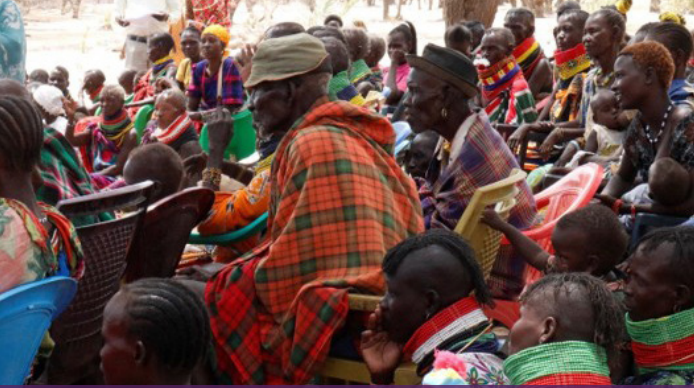
Participants noted that where women, youth and marginalised communities are excluded from decision-making processes, public institutions become less responsive and communities more vulnerable to division, mistrust and tension.
They further observed that discrimination in economic participation, education, leadership and access to justice can deepen grievances and weaken social cohesion if left unaddressed. The discussions reflected wider national and international findings that peacebuilding efforts are more sustainable when they address the underlying causes of exclusion rather than responding only to visible conflict.
Stakeholders emphasised that inclusive societies, where rights are protected and participation is broad-based, are more likely to experience long-term peace, economic stability and resilience.
Where communities feel represented and protected, trust in institutions tends to improve, civic participation increases and disputes are more likely to be resolved through dialogue rather than confrontation. Participants also highlighted that empowering women and young people in governance and development processes contributes to stronger local leadership, innovation and shared responsibility.
The meeting reaffirmed that equality and peace are closely connected policy priorities rather than separate development goals. A key outcome of the engagement was the shared commitment to strengthen grassroots initiatives that promote peaceful coexistence and civic responsibility.
Discussions explored practical areas of collaboration including community-based civic education programmes, youth empowerment initiatives and joint advocacy on human rights, social cohesion and inclusion. Particular emphasis was placed on reaching communities directly through local forums, awareness campaigns and partnerships that encourage informed participation in governance processes.
Officials noted that sustainable peace is often built at community level, where citizens interact daily and where early tensions can either be resolved through dialogue or allowed to escalate. Youth empowerment featured prominently during the talks, with participants recognising the role of young people as both stakeholders and agents of peace.
The meeting considered opportunities to support youth leadership, civic awareness, entrepreneurship and participation in decision-making spaces as part of broader conflict prevention strategies.
Stakeholders observed that where young people face persistent exclusion, unemployment and lack of representation, communities may become more vulnerable to unrest and instability.
By contrast, investing in youth inclusion can strengthen social resilience and expand opportunities for positive community engagement.
The National Gender and Equality Commission has a constitutional mandate to promote equality and freedom from discrimination, while safeguarding the rights of special interest groups including women, youth, persons with disabilities, children, older members of society, minorities and marginalised communities.
Its engagement with peace-focused organisations reflects the increasing recognition that human rights, equality and peacebuilding are interdependent areas requiring coordinated responses.
Through its regional offices, the Commission continues to expand partnerships aimed at translating constitutional principles into practical community outcomes.
The Nakuru engagement between the Commission and the International Family Pageant Global Advocates of Peace Flag signals a deliberate effort to advance collaborative approaches to peacebuilding rooted in equality and inclusion.
As Kenya continues to address social and economic disparities, such partnerships are expected to play an important role in promoting civic awareness, reducing exclusion and strengthening community cohesion.
The discussions underscored a central policy reality: sustainable peace is more likely where dignity is protected, participation is meaningful and development opportunities are shared across all sections of society.