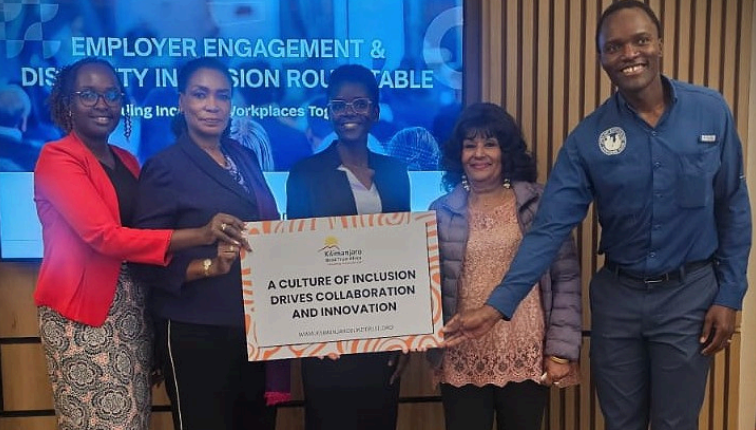
NAIROBI, Kenya — The National Gender and Equality Commission (NGEC) has called for accelerated implementation of disabilityinclusive employment policies across Kenya, urging employers to move beyond compliance towards building workplaces founded on equality, accessibility and human rights. The call was made during the Employer Engagement and Disability Inclusion Roundtable hosted by Kilimanjaro Blind Trust Africa, where employers, human resource professionals, government agencies, Organisations of Persons with Disabilities (OPDs) and development partners met to identify practical solutions for increasing the participation of persons with disabilities in the labour market.
The roundtable focused on translating the provisions of the Persons with Disabilities Act, 2025 into workplace practice by strengthening accessible recruitment systems, promoting reasonable accommodation, expanding the use of assistive technologies and embedding disability inclusion within organisational policies.
The engagement reflects growing national efforts to address persistent employment inequalities affecting persons with disabilities and to ensure that Kenya's labour market aligns with constitutional guarantees on equality and non-discrimination.
Representing the Commission's Disability and Elderly Affairs Division, Lynette Kigotho delivered a presentation titled "Shifting the Disability Narrative: From Charity to a Rights-Based Approach," challenging institutions to rethink how disability is understood within employment and public policy.
She emphasized that disability inclusion is not a matter of goodwill or corporate philanthropy but a legal obligation grounded in the Constitution of Kenya, the Persons with Disabilities Act, 2025, and Kenya's international human rights commitments. She urged employers to remove structural, physical, institutional and attitudinal barriers that continue to limit equal access to employment opportunities for persons with disabilities.
The discussions come at a time when Kenya is strengthening implementation of legal and policy reforms aimed at creating more inclusive workplaces. Although the Constitution guarantees equality before the law and freedom from discrimination, stakeholders noted that many qualified persons with disabilities continue to encounter significant barriers during recruitment, hiring, career progression and retention. Participants observed that inaccessible recruitment procedures, inaccessible workplaces, limited access to assistive technologies, inadequate workplace accommodation and persistent stereotypes continue to restrict employment opportunities despite increasing awareness of disability rights. Employers attending the forum examined practical measures that organisations can adopt to comply with the Persons with Disabilities Act, 2025.
These included introducing accessible recruitment processes, reviewing human resource policies through a disability inclusion lens, investing in universal design, improving workplace accessibility, providing reasonable accommodation and integrating assistive technologies into everyday work environments.
Human resource professionals also discussed the importance of strengthening inclusive organisational cultures where disability inclusion is reflected not only in recruitment but throughout the employee lifecycle, including onboarding, professional development, leadership progression and performance management.
Participants agreed that inclusive workplaces benefit both employers and employees. By expanding access to diverse talent, organisations can strengthen innovation, improve problem-solving capacity and build workforces that better reflect the diversity of Kenyan society. Stakeholders observed that disability inclusion should therefore be viewed as both a human rights obligation and a strategic investment in organisational performance and national economic development.
The engagement also explored the critical role of collaboration between government institutions, employers, Organisations of Persons with Disabilities, professional bodies, academic institutions and development partners in accelerating disability inclusion.
Participants emphasized that coordinated implementation, continuous employer sensitisation and regular monitoring will be necessary to ensure that legal reforms translate into measurable improvements in employment outcomes.