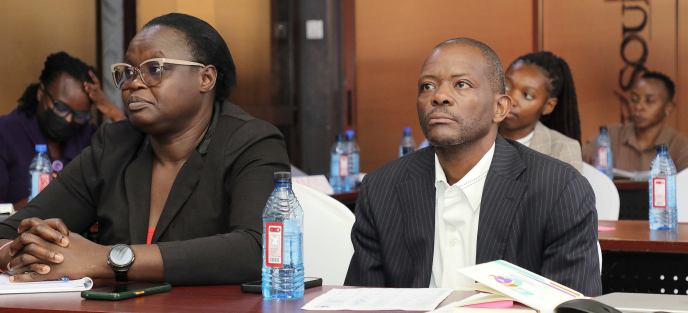
The National Gender and Equality Commission (NGEC), in collaboration with Plan International Kenya, has undertaken an intensive Safeguarding Training aimed at strengthening institutional systems and reinforcing individual responsibility in the prevention and response to harm. Led by Plan International Kenya, the training brought together Commission staff to enhance understanding of safeguarding frameworks, child protection principles, and accountability mechanisms, with a focus on creating safer and more inclusive environments for children, young people, women, persons with disabilities, older persons, minorities and marginalised communities.
The training focused on reinforcing safeguarding as a core institutional responsibility that combines policy, systems, and individual conduct in preventing and responding to harm. Participants examined NGEC’s safeguarding mandate alongside national and global child protection frameworks, with emphasis on how institutional procedures must be consistently applied across programmes and engagements.
The sessions underscored that safeguarding is both a structural requirement and a behavioural responsibility, requiring ethical practice, vigilance, and adherence to established reporting and response mechanisms. A key component of the training involved the application of child protection principles within both local and international contexts.
Drawing from global safeguarding standards, participants were trained on zero tolerance to abuse and exploitation, mandatory reporting obligations, and the responsibility of all staff to act when safeguarding concerns arise.
Plan International Kenya led discussions on how international safeguarding principles are translated into practical organisational procedures, particularly in programme delivery and community-level interactions. The training reinforced the importance of consistency, accountability, and responsiveness in safeguarding systems.
The sessions explored the nature and causes of abuse, with particular focus on how social norms, power relations, and individual behaviour influence vulnerability and protection outcomes. Participants examined how gender roles, authority structures, disability, and inequality can shape exposure to risk and contribute to cases of harm going unreported or unaddressed.
The discussions highlighted the importance of recognising early warning signs and strengthening institutional capacity to respond effectively to safeguarding concerns. Emphasis was placed on the role of personal values, attitudes and behaviour in either strengthening or weakening safeguarding systems. A central outcome of the training was the advancement of a Safeguarding Policy and practical implementation guide.
Participants noted that well-defined safeguarding policies are critical in ensuring that cases of harm are not ignored and that responses are consistent, timely and survivor-centred. The framework is also intended to improve clarity in reporting procedures and strengthen institutional coordination in handling safeguarding concerns.
The Safeguarding Training led by Plan International Kenya in collaboration with the National Gender and Equality Commission marks a significant step in strengthening institutional protection systems and ethical practice. By enhancing understanding of safeguarding frameworks, mandatory reporting obligations, and behavioural responsibility, the training equips staff with practical tools to prevent harm and respond effectively to protection concerns.
The initiative reinforces a clear institutional commitment to safeguarding as a foundational principle for all programmes and engagements, ensuring safer and more inclusive environments for all.
.JPG)