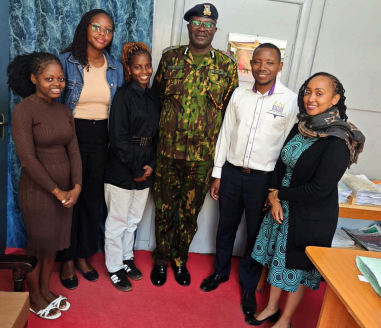
NAKURU, Kenya — Against the backdrop of a national child protection crisis that has seen an average of 23 children disappear daily over the past 15 months, the National Gender and Equality Commission (NGEC) and the National Police Service have moved to deepen their collaborative framework, vowing to transform fragmented responses into a cohesive, survivor-centred system of protection and accountability.
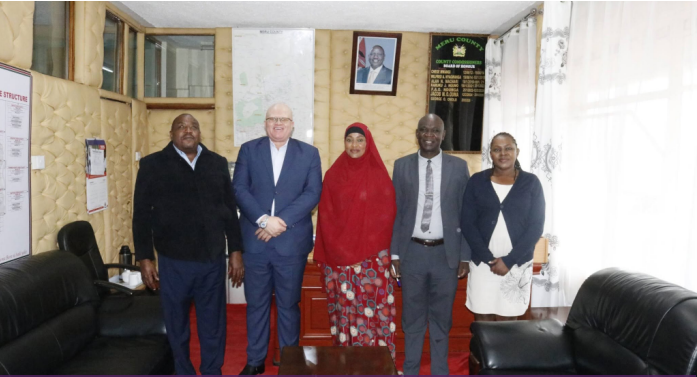
The Nakuru Regional Office, represented by Mr Lewis Mwaniki and Ms Nancy Mwangi, held a high-level consultative engagement with Rift Valley Regional Deputy Police Commander Mr Michael Diang'a, aimed at strengthening interagency collaboration in the protection and promotion of the rights of Special Interest Groups (SIGs), and enhancing coordinated responses to emerging equality and human rights concerns across the region.
At the centre of the discussions was the alarming and persistent rise in reported cases of missing children—an issue that continues to pose a grave threat to child safety, protection, and overall well-being.
According to data from Kenya's Child Protection Information Management System (CPIMS), between January 2025 and March 2026, Kenya recorded 10,581 child protection cases, including 1,636 cases of missing children, 1,952 abductions, 6,820 abandonment cases and 173 trafficking incidents. Over 2,300 children remain unaccounted for.
The meeting also interrogated the urgent need to reinforce prevention, reporting, and management systems for GenderBased Violence (GBV), with a shared emphasis on survivor-centred response mechanisms and faster, more coordinated institutional action.
The Rift Valley, Eastern and Western regions have recorded the highest number of femicide deaths nationally. Kenya has now lost a total of 579 women to femicide.
Both institutions underscored the indispensable role of multi-agency partnerships in advancing justice, particularly in improving access to timely redress for survivors, strengthening response frameworks, and deepening public awareness on child protection, personal safety, and the critical importance of prompt reporting of incidents. Mr Diang'a reaffirmed the National Police Service's commitment to protecting vulnerable populations while stressing the need for sustained public sensitisation on evidence preservation as a cornerstone of effective prosecution and accountability.
"Too many cases collapse before they reach court because crucial evidence is not preserved or because survivors are not supported through the process," Mr Diang'a emphasised. "We are talking about forensic evidence, medical reports, digital footprints, and witness testimony. If we do not handle these with the utmost professionalism, perpetrators walk free, and the cycle of violence continues. That is a failure of the entire system, not just the police."
The meeting identified several critical gaps in the current response architecture. First, the lack of standardised protocols for handling missing children cases has led to inconsistent reporting, delayed investigations, and missed opportunities for rescue. Second, the absence of dedicated, trauma-trained investigators at many police stations means that child survivors of violence often face re-traumatisation during the reporting and documentation process. Third, weak interagency information-sharing between the police, the Department of Children's Services, health facilities, and civil society organisations has hampered coordinated search and rescue operations.
To address these gaps, the engagement identified concrete opportunities for strengthened collaboration, including targeted capacity-building initiatives to deepen understanding of the Commission's mandate and to reinforce referral pathways and response systems for complaints affecting Special Interest Groups.
The meeting also explored the potential for establishing dedicated child protection desks at all police stations in the region, equipped with trained personnel and resources to handle missing children cases with the urgency they demand. Currently, while some stations—particularly in Nakuru and Eldoret have functional desks, coverage remains uneven, and many officers lack specialised training in handling cases involving minors.
Mr Mwaniki further stressed that GBV response must be survivor-centred an approach that places the dignity, safety, and agency of the survivor at the core of every intervention.
This includes ensuring that survivors have access to immediate medical care, psychosocial support, legal aid, and safe shelter, and that they are not subjected to secondary victimisation through insensitive questioning, long waits, or bureaucratic hurdles.
NGEC pledged to provide technical support to the police in developing standard operating procedures for missing children cases, to facilitate community dialogues aimed at breaking the silence around GBV and child abuse, and to monitor the implementation of agreed-upon actions through its regional oversight mechanism.
Both parties agreed to convene quarterly review meetings to track progress, address emerging challenges, and adapt strategies based on evolving trends.