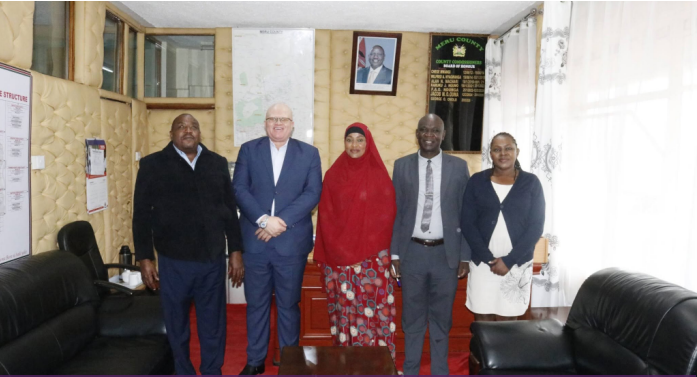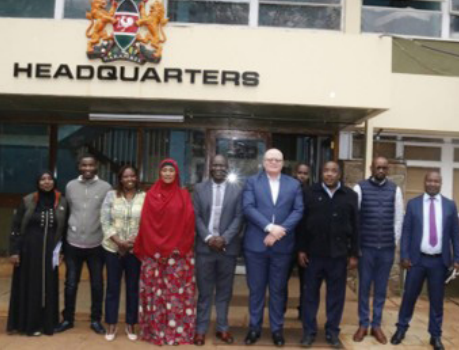
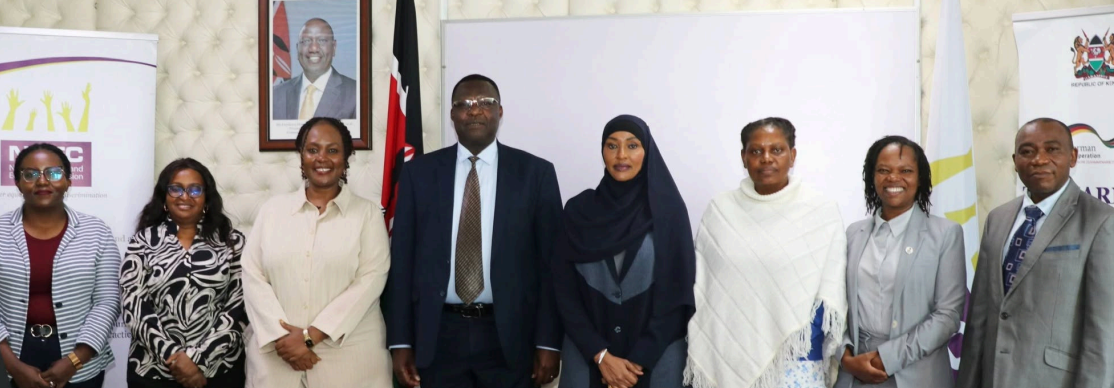
NAIROBI, Kenya — Strengthening the protection of migrants, refugees, internally displaced persons and other vulnerable populations has emerged as a key priority in Kenya's evolving migration agenda following high-level discussions between the National Gender and Equality Commission (NGEC) and the International Organization for Migration (IOM).
The engagement focused on expanding institutional collaboration to advance gender-responsive migration governance, strengthen human rights protections and improve coordinated responses to emerging migration challenges affecting Kenya and the wider region.
The courtesy visit comes as Kenya continues to strengthen migration governance through whole-of-government and multi-stakeholder approaches that integrate migration into national development planning while promoting social inclusion, protection and regional cooperation.
Kenya remains both a country of origin, transit and destination for migrants and hosts significant refugee and internally displaced populations, making effective migration governance an increasingly important public policy priority. During the engagement, the Commission and IOM identified strategic areas for collaboration to ensure that migration policies respond to the diverse experiences and protection needs of women, men, girls, boys, and other Special Interest Groups. The discussions centred on promoting migration governance that upholds equality, dignity and freedom from discrimination while strengthening institutional capacity to respond to increasingly complex migration dynamics.
Among the priority areas discussed was the prevention of Gender-Based Violence (GBV) in migration settings. The two institutions explored approaches to strengthen protection systems for migrants who may be exposed to violence, exploitation and abuse during displacement or migration. Particular attention was given to refugees, internally displaced persons, migrant workers and other vulnerable populations whose circumstances often increase their exposure to multiple risks.
Counter-trafficking and efforts to combat migrant smuggling also featured prominently during the discussions. The Commission and IOM recognised that trafficking in persons and migrant smuggling continue to undermine human rights and expose vulnerable individuals to forced labour, sexual exploitation and other forms of abuse.
They underscored the need for stronger institutional coordination, prevention strategies, survivor-centred protection mechanisms and effective implementation of legal and policy frameworks to address these crimes.
Evidence-based policymaking emerged as another key area of cooperation. The Commission and IOM discussed strengthening migration data systems and research to improve understanding of migration patterns, inform policy decisions and support targeted interventions. They noted that reliable, sex-, age- and disability-disaggregated data is essential for identifying protection gaps, monitoring trends and designing programmes that respond effectively to the needs of migrants and host communities. Kenya has continued to strengthen migration governance through coordinated data, policy and institutional frameworks under its national migration agenda.
Climate-induced displacement was identified as an increasingly important area requiring coordinated institutional responses. The discussions recognised that prolonged droughts, floods and other climate-related events continue to drive population movements within Kenya and across the Horn of Africa, creating new humanitarian and development challenges.
The Commission and IOM explored opportunities to integrate climate resilience, disaster risk reduction and protection measures into migration governance to better safeguard affected communities. Both institutions underscored that protecting vulnerable populations.