In a world rapidly transformed by technology, artificial intelligence has emerged as a potent instrument not just for innovation but for social change. The question is no longer whether AI can drive economic growth—it is how it can be leveraged to promote equity, justice, and empowerment for those historically left behind.
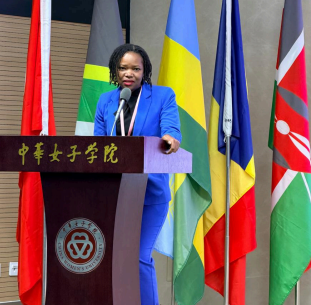
At the heart of this discourse, Dr. Purity Ngina, Commission Secretary and CEO of the National Gender and Equality Commission (NGEC), attended the AI for Promoting Women’s Empowerment in Developing Countries seminar, hosted by China Women’s University in Beijing from 16 to 25 November 2025. The gathering brought together female leaders, policymakers, and technologists from across Africa, Asia, and Latin America, all united by a shared goal: exploring how technology can dismantle barriers, close gender gaps, and strengthen inclusive governance.
The seminar offered an intensive exploration of AI’s potential to transform governance, public service delivery, and social policy. Presenters shared China’s experience in deploying AI to improve access to healthcare, optimize education delivery in rural communities, and strengthen mechanisms for social accountability. These initiatives illustrated how technology could serve both efficiency and equity, providing lessons that developing countries could adapt to local contexts.
Comparative studies from other nations further enriched discussions. In India, AIenabled microfinance platforms have allowed women in marginalized communities to access credit, manage finances, and participate more fully in economic life. In Brazil, AI systems are employed to monitor patterns of gender-based violence, enabling authorities to respond quickly to risks and protect vulnerable populations.
Such global examples highlighted the transformative power of AI when coupled with thoughtful policy and ethical oversight.
Despite the promise of AI, women remain underrepresented in its creation and governance. Studies from UNESCO and the World Economic Forum show that fewer than one-third of AI professionals worldwide are women, a disparity that risks embedding gender bias into systems and applications. The Beijing forum emphasized the urgent need to promote women’s participation in AI design, governance, and policy development. Without such measures, technological innovation may unintentionally perpetuate exclusion.
The seminar also examined the ethical dimensions of AI deployment, particularly in relation to data privacy, algorithmic bias, and digital safety. Participants debated strategies to ensure that AI-driven solutions advance women’s rights, protect vulnerable communities, and foster transparency and accountability.
Beyond theory, the seminar provided practical engagement with AI applications relevant to gender equality. Interactive workshops demonstrated AI tools capable of monitoring access to education, predicting service gaps, and delivering legal or health information to underserved populations. Participants explored ways to integrate AI into national strategies for women’s empowerment, emphasizing that technology must complement, not replace, humancentred policy interventions.
For NGEC, these lessons resonate deeply. AI offers a pathway to strengthen monitoring of gender equity, enhance data collection on gender-based violence, and support evidencebased policymaking. By harnessing such tools, the Commission can more effectively advocate for women, track progress in inclusion, and ensure that no woman or girl is left behind in Kenya’s development agenda.
The seminar underscored that technology is a tool whose impact is determined by the vision and values guiding its use. Dr. Ngina’s participation highlights NGEC’s commitment to embracing innovation as part of a broader strategy for equity and empowerment.
As AI continues to reshape societies, the imperative is clear: women must not only benefit from technological progress—they must be at the table where it is designed, regulated, and implemented. For Kenya, this engagement signals a forward-looking approach to embedding gender equality into the digital transformation of governance, education, and public service delivery. “AI can be a bridge — not a barrier. If developed inclusively, it can amplify voices that have long been silenced,” she said.