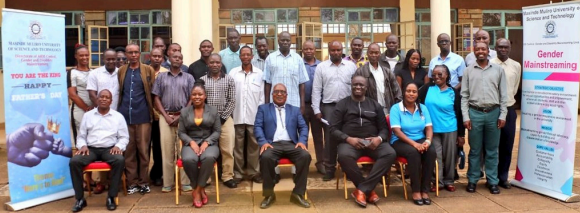
Kakamega, Kenya — In a nation where traditional expectations of masculinity often demand silence, stoicism, and strength without vulnerability, a quiet revolution is unfolding. And it began, rather unexpectedly, with a celebration of fathers.
At Masinde Muliro University of Science and Technology (MMUST), the Kisumu Regional Office of the National Gender and Equality Commission (NGEC) held a groundbreaking engagement with male faculty and students—a session that boldly declared: “Men matter—at home, at work, in society.”
Behind the simplicity of that phrase lies a deeper, timely message: Kenya’s path to gender equality must include, not sideline, men. Particularly fathers. Particularly boys. Particularly the vulnerable and voiceless among them. “When fathers are present and emotionally engaged, communities thrive. Equality is not just a women’s issue—it’s everyone’s issue,” said Mr. Davis Okeyo, NGEC Kisumu Regional Office. “And it starts by giving men permission to feel, to speak, and to care.”
The Kisumu Regional Office has long been active in grassroots outreach, policy monitoring, and legal compliance. But its latest focus on fatherhood, male mental health, and the redefinition of masculinity underscores the Commission’s commitment to leaving no one behind.
“When we speak of special interest groups— youth, older persons, persons with disabilities —we must also recognise that men, too, can be vulnerable. Equality is not about replacing one form of dominance with another. It is about partnership,” said Mr. Davis Okeyo, NGEC Kisumu Regional Office.
NGEC’s constitutional mandate spans a wide range of functions—from facilitating gender mainstreaming in all public and private institutions to conducting equality audits and compliance assessments in line with Articles 27, 43, and 56 of the Constitution.
But where policies often struggle to penetrate culture, storytelling and campus engagements like this one are proving powerful tools for change.As the Commission prepares to replicate this model across other campuses and communities, it calls on other actors—county governments, universities, private sector stakeholders, and faith-based institutions—to take male engagement seriously. With suicide rates among Kenyan men nearly three times higher than women, and societal expectations around masculinity still stifling, the need for interventions like this has never been more urgent.