NAIROBI — In a country where inequality is often felt most sharply in hospital corridors and community clinics, a high-level engagement at the National Gender and Equality Commission (NGEC) marked a decisive step toward bridging the gap between policy and lived reality.
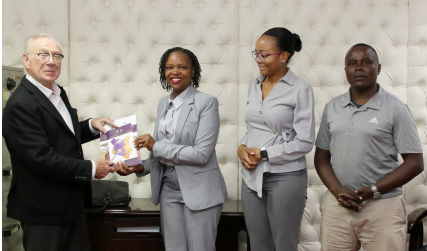
The Commission convened representatives from Fit For Future Kenya, Future for Kenya Trust, and DeckerMed Africa Trust, including Brian C. Decker, Chairperson of Decker Med Africa Trust, and Esther Baranga, Director of Development, for in-depth deliberations on strengthening collaboration to advance gender equality, inclusion and equitable access to healthcare.
Led by NGEC Chief Executive Officer Dr. Purity Ngina, the meeting brought into focus a shared priority: ensuring that Kenya’s most vulnerable populations women, children, persons with disabilities, older persons and marginalized communities are not left behind in health systems, justice processes or national development.
At the Centre of the discussions was the persistent inequity in access to quality healthcare for Special Interest Groups (SIGs).
Despite policy commitments and legal safeguards, structural barriers including poverty, distance, stigma and limited specialized services continue to deny many communities timely and dignified care.
Leaders acknowledged that healthcare inequality is not merely a service delivery issue, but a governance challenge that demands coordinated action across sectors. Strengthening partnerships between public institutions and specialized organizations, they noted, is essential to closing gaps in preventive care, early diagnosis and treatment.
A major focus of the engagement was Female Genital Mutilation (FGM) a harmful practice whose physical, psychological and social consequences continue to affect generations of girls and women. The Commission and partner organizations reaffirmed a shared commitment to intensifying public awareness on the lifelong effects of FGM, while advancing community-based prevention strategies that reflect local realities. Leaders emphasized that sustainable change requires more than condemnation; it requires culturally informed dialogue, trusted community voices and survivor centered interventions.
By grounding prevention efforts in evidence and lived experience, the partners aim to disrupt cycles of silence and normalization that have allowed the practice to persist despite legal prohibition.
Recognising that good intentions must be matched by measurable outcomes, the meeting placed strong emphasis on research and datadriven solutions. Leaders examined how robust data can identify service gaps, inform policy reform and ensure programmes are responsive to the actual needs of Special Interest Groups.
Translating dialogue into action, the Commission and partner organizations confirmed plans to cohost a medical camp in February, designed to deliver direct, life saving services to women.