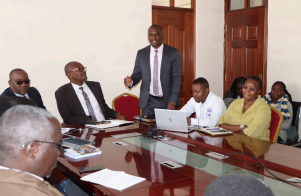
In a decisive move to anchor equality at the heart of local development, the National Gender and Equality Commission (NGEC), through its Nakuru Office, convened a high-level partners’ forum in Nyandarua County. Themed around smart, inclusive solutions, the meeting explored innovative ways to ease the daily burdens borne disproportionately by women, older persons, and other special interest groups.
The event, held in collaboration with the Nyandarua County Government and development partners, delved into issues ranging from access to clean water, digital innovations in household labour, to the plight of street-connected families. The discussions revealed a compelling narrative: that everyday inequality is not merely a matter of personal struggle but a systemic issue requiring bold, rights-based policy intervention.
“Equality is a constitutional right,” stated Ms. Agnes Njunji, the County Executive Committee Member (CECM) present at the forum. “We must go beyond token inclusion. Our development strategies must integrate gender responsiveness, accessibility for persons with disabilities, and real support for older persons.”
In rural Nyandarua, where the burden of fetching water still falls heavily on women and girls, NGEC proposed a piped water infrastructure strategy to reach households directly —thereby reducing time poverty and improving maternal health outcomes. This was supported by evidence shared during the forum showing that women in some parts of the county walk up to 6 kilometres daily to access clean water, exposing them to both physical strain and insecurity.
Another transformative idea floated was the digitisation of labour-saving household tools and sustainable energy alternatives to lessen women’s dependence on firewood and manual farm tools. Such interventions, the Commission argued, align directly with Kenya’s obligations under Article 43 of the Constitution, which guarantees every Kenyan the right to health, water, education, and dignity.
The initiative exemplifies NGEC’s broader mission: to translate constitutional promises into tangible gains for women, youth, children, persons with disabilities, minorities, older persons, and all those whose voices often go unheard.
.JPG)