Migration is about people before it is about borders. As migration patterns across the Horn of Africa continue to evolve, the challenge for governments is to strengthen border security while ensuring that people on the move are protected from exploitation, violence and discrimination.
Criminal networks continue to exploit vulnerable migrants through document fraud, migrant smuggling and trafficking routes. Women and girls, children, persons with disabilities, migrant workers, refugees and other at-risk groups can face heightened risks of abuse and exploitation, particularly when travelling through irregular routes.
It is against this backdrop that the National Gender and Equality Commission participated in the Regional Counter-Smuggling Programme (RCSP) engagement, bringing together the International Organization for Migration (IOM) Kenya, the Directorate of Immigration Services and other government agencies to strengthen coordinated responses to migrant smuggling and related forms of transnational organised crime.
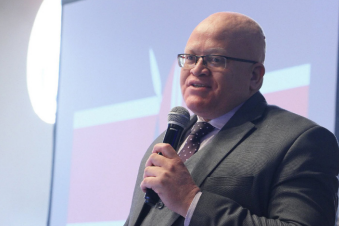
Representing the Commission, Commissioner Michael Mbithuka called for migration governance systems that place gender equality and social inclusion at the centre of border management and migration policy.
He emphasised that effective migration governance must recognise the different risks faced by people on the move. Women and girls, persons with disabilities, children, refugees, victims of trafficking and migrants using irregular routes may experience particular vulnerabilities, including exploitation, violence, discrimination and abuse.
For the Commission, protecting these groups is integral to effective migration management. This requires gender-responsive policies, disability inclusion and victim-centred protection measures to be incorporated into migration and border management systems.
The engagement also highlighted the need for stronger identification and referral mechanisms for vulnerable migrants, enhanced institutional capacity, improved data and intelligence, and stronger collaboration among agencies responsible for migration management and protection.
The RCSP seeks to strengthen cooperation among Kenya, Ethiopia and Somalia in addressing migrant smuggling, document fraud and transnational organised crime. Its regional approach recognises that these challenges require coordinated responses across borders, supported by effective information sharing and institutional collaboration.
As migration governance systems continue to evolve, the Commission’s engagement reinforces a broader principle: security and human rights are mutually reinforcing. Stronger borders must be accompanied by stronger protection systems that ensure people are treated with dignity and protected from exploitation, regardless of their gender, age, disability, nationality or social status.
For the Commission, advancing equality means ensuring that protection extends to people wherever they are, including those crossing borders in search of safety, opportunity or a better life.
.JPG)