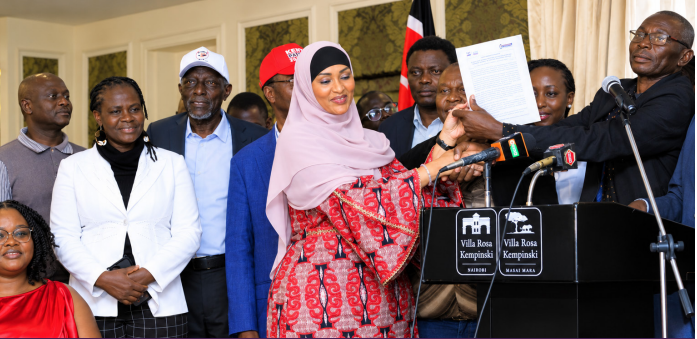
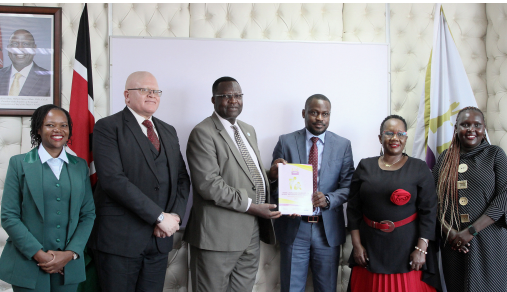
NAIROBI — More than a decade after devolution reshaped Kenya’s governance architecture, the true measure of county government is increasingly clear: not merely how services are delivered, but whose lives are transformed in the process. It is against this backdrop that the National Gender and Equality Commission (NGEC) hosted the County Assemblies Forum (CAF), led by Chairperson Hon. Seth Kamanza, for a substantive engagement aimed at strengthening collaboration to advance equality, dignity and inclusive development across Kenya’s 47 counties.
The meeting brought together institutional leaders united by a common imperative — ensuring that devolved governance translates constitutional guarantees into tangible outcomes for Special Interest Groups, including women, persons with disabilities, youth, older persons and marginalised communities.
County assemblies sit at the centre of Kenya’s devolved system, exercising authority over legislation, budgeting and oversight. For millions of Kenyans, especially those historically excluded from power, decisions made in county chambers directly shape access to health care, education, livelihoods and social protection.
Discussions during the engagement underscored that devolution is not a neutral administrative arrangement; it is a human rights project. When county laws and budgets fail to account for inequality, they risk entrenching exclusion. When designed intentionally, they become powerful tools for redressing historical disadvantage.
NGEC emphasised that counties remain the most immediate and consequential arena for advancing equality, making partnership with county assemblies both strategic and necessary.
A central focus of the dialogue was the need to strengthen evidence-informed policymaking at the county level. Leaders acknowledged that legislation driven by political expediency, rather than data, often fails to address real needs or reach the most vulnerable.
NGEC and the County Assemblies Forum explored mechanisms for embedding research, gender analysis and disaggregated data into legislative and budgetary processes. Such an approach enables county governments to identify gaps, prioritise resources and measure impact with greater precision.
By grounding policy choices in evidence, leaders noted, counties can move from symbolic commitments to measurable progress on equality and inclusion.
The engagement paid particular attention to the lived realities of Special Interest Groups whose needs are often overlooked in county planning. Women continue to face economic and political barriers; persons with disabilities encounter inaccessible infrastructure and services; youth grapple with unemployment and exclusion; older persons face neglect; and marginalised communities remain underrepresented in decision-making.
NGEC stressed that inclusive county governance requires more than representation — it demands laws, budgets and oversight mechanisms that are responsive to these intersecting vulnerabilities. County assemblies, the Commission noted, have a critical responsibility to interrogate how proposed legislation and expenditures affect different population groups, and to ensure that no community is rendered invisible by policy design.
Recognising the complexity of this task, NGEC reaffirmed its commitment to targeted capacity-building for Members of County Assemblies (MCAs). Planned training programmes will focus on gender-responsive legislation and budgeting, equipping legislators with practical tools to integrate equality considerations into their core mandates.
Such capacity-building, leaders observed, strengthens not only policy outcomes but also institutional credibility, enabling MCAs to exercise oversight with a sharper understanding of constitutional obligations.
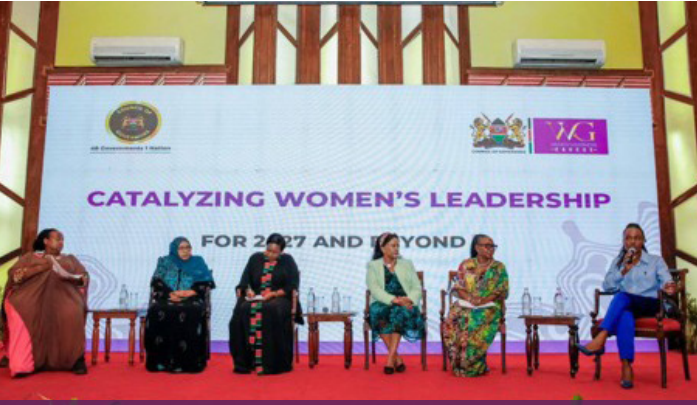
The discussions took place as the County Assemblies Forum prepares to convene the inaugural Women Legislators Conference, a milestone for women’s leadership within devolved governance.
NGEC welcomed the initiative as a critical platform for building solidarity, sharing best practices and amplifying women’s voices in legislative spaces. Evidence from across governance systems shows that women’s leadership often correlates with more inclusive policy priorities, particularly in social services, equity and community development. Strengthening women’s legislative leadership, NGEC noted, is not simply about numbers — it is about transforming how power is exercised at the county level.