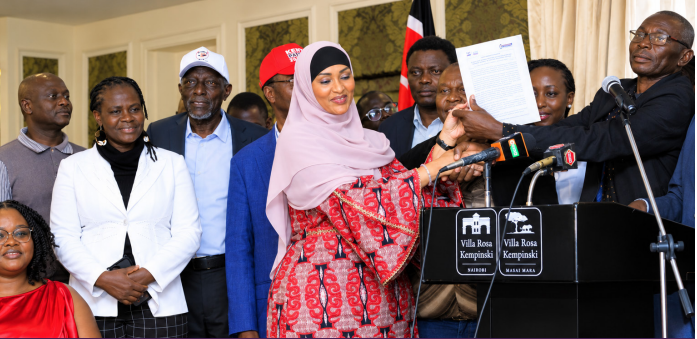
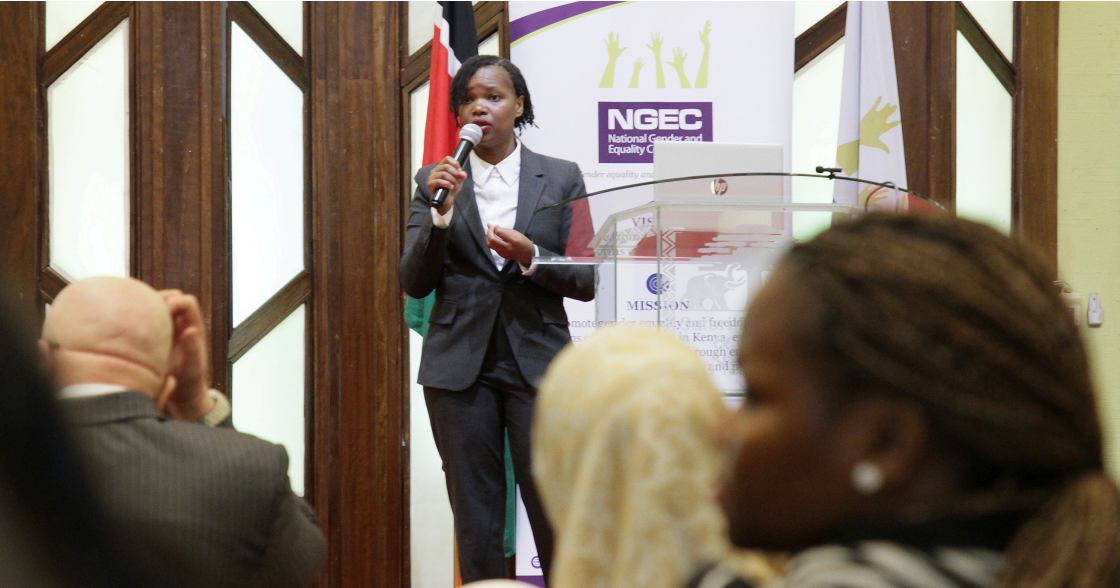
The National Gender and Equality Commission (NGEC) Strategic Plan 2025–2029, outlines a bold and structured agenda to entrench equality and inclusion across every layer of national development. Presenting the Plan during the official launch, NGEC CEO Dr. Purity Ngina described the five-year blueprint as both a continuity of mandate and a sharpened commitment to constitutional obligations and global aspirations.
Anchored on Vision 2030, the BottomUp Economic Transformation Agenda (BETA), the Fourth Medium-Term Plan (MTP IV), the Sustainable Development Goals (SDGs), and the African Union’s Agenda 2063, the Strategic Plan is costed at KSh 7 billion.
Its implementation will rely on a blend of exchequer allocations, development partner support, private sector partnerships, and contributions from civil society actors. At the heart of the Plan are five thematic areas:
- Compliance, Monitoring and Reporting – focused on enhancing adherence to equality principles across state and non-state institutions.
- Investigations and Redress – aimed at reducing rights violations through responsive complaints handling;
- Public Education and Mainstreaming – designed to promote public awareness and implementation of affirmative action frameworks;
- Research and Knowledge Management – to increase data-driven policy formulation through targeted evidence generation and dissemination;
- Institutional Capacity Strengthening – to enhance NGEC’s operational reach, staffing, infrastructure, and regional presence.
Dr. Ngina reported that the preceding 2019–2024 Plan achieved a 63% implementation rate despite constrained funding, limited human capital, and visibility gaps. Those experiences, she noted, informed the structure and focus of the new Plan.
“This is not a reinvention,” she explained. “It is a continuation, refined by experience and grounded in both past results and future ambition.”
The Commission has designed a detailed implementation and coordination framework to ensure accountability and effectiveness, with execution tracked through annual workplans and 109 performance indicators. The plan includes a costed Monitoring and Evaluation (M&E) framework that will support real-time learning, periodic reviews, and adaptive programming.
An important feature of the Plan is its renewed focus on Special Interest Groups (SIGs) including women, youth, and persons with disabilities, children, older persons, and marginalized communities. Through targeted compliance checks, redress mechanisms, and public education campaigns, the Commission aims to ensure that inclusion is not aspirational but practical and measurable.
Dr. Ngina emphasized that the Strategic Plan is not just an internal guide but a national call to action. “Equality is not the work of one Commission it is a shared national commitment,” she said.
With a comprehensive action plan, clear thematic direction, and a costed implementation framework, NGEC’s Strategic Plan 2025–2029 signals a maturing institution ready to scale its impact provided the country matches ambition with resources.s