In Kenya today, powered by a youthful population and teeming with ideas, a new frontier of nationbuilding is quietly unfolding. A generation primed for innovation is stepping forward not just as beneficiaries of change, but as architects of it. At the centre of this transformation is the National Gender and Equality Commission (NGEC), which is engaging young Kenyans on two critical fronts: the creative economy and their mental health and well-being.
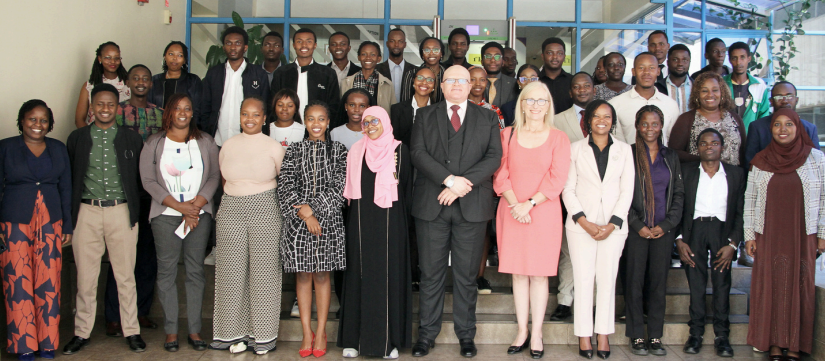
The Commission convened a highprofile youth dialogue under the theme “Harnessing the Power of the Creative Economy”. Young people from across the country filmmakers, musicians, digital media producers, fashion designers, visual artists gathered to explore how their art could serve as more than expression: how it could become economic opportunity, civic voice and social change.
Kenya’s young people are creators of culture, drivers of innovation and architects of the nation we are building together,” delivered by Commissioner Nzomo Mbithuka on behalf of NGEC Chairperson Hon. Rehema Jaldesa. “When we listen to their ideas, amplify their voices, and open doors for their talent to thrive, the whole country rises. The creative economy is not peripheral to development it is central to achieving equality, inclusion, and sustainable growth. It gives young people not only a way to earn but a way to be heard. Through film, fashion, music, and digital art, they are shaping Kenya’s narrative, challenging stereotypes, and building a society that values imagination as much as innovation.”
Adding further weight to the event was a courtesy visit from the Australian High Commissioner, Jenny Da Rin, who reaffirmed her country’s commitment to supporting youth participation, creative entrepreneurship and economic inclusion in Kenya.
For Kenya where youth unemployment remains alarmingly high and traditional job markets no longer absorb large entry-level cohorts — the creative economy offers a promising alternative. As noted in recent commentary, while 83.6 % of employed people are in the informal sector, the creative economy is emerging as a space of fulfilment, flexibility and faster returns.
Young Kenyan creators are increasingly leveraging digital platforms to tell authentically Kenyan stories and connect with global audiences. The shift is transformative: art becomes livelihood; talent becomes influence. But as NGEC emphasises, such a shift must be anchored in supportive policy frameworks that protect rights and expand opportunities.
“A more inclusive creative economy is not simply about entertainment it is about dignity, agency and economic justice for every young Kenyan, ” Jaldesa’s statement concluded. “When creativity is valued as work, when talent is rewarded fairly, and when innovation is seen as leadership, we move closer to the Kenya we all imagine. ”
A Parallel Conversation: Youth Mental Health and Well-Being
The dialogue did not stop at opportunity. In a parallel forum, NGEC convened youth representatives alongside mental health experts for an open conversation on the stresses facing young Kenyans. From unemployment and identity struggles, to stigma, trauma and digital-age anxieties, the forum delved into realities too often kept silent.
Too many young people carry heavy burdens in silence and without support. Recent data indicates that among adolescents in Kenya, 44.3 % experienced a mental-health problem in the past year and only 11.1 % accessed counselling or emotional behavioural support.
In the forum, expert facilitators emphasised a vital truth: mental well-being is not merely a health issue it is a rights and equality issue.