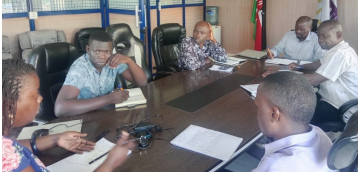
The National Gender and Equality Commission (NGEC) Kisumu Regional Office hosted Dr. David Ngira, an Economic and Social Rights Researcher from Amnesty International, for a consultative engagement examining the impact of recent political processes in Kenya, particularly the 2024 protests and campaign period, on Special Interest Groups. The discussions focused on how economic hardship, unemployment, taxation policies and social unrest continue to disproportionately affect vulnerable populations, including women, youth, children, persons with disabilities, older persons, minorities and marginalised communities.
The engagement explored the broader social and economic conditions that contributed to the 2024 protests, including the rising cost of living, unemployment and proposed tax measures under the Finance Bill 2024. Participants noted that public frustration was largely driven by concerns over increasing economic hardship, particularly among young people facing unemployment and limited economic opportunities.
Reports from Amnesty International and other human rights organisations indicate that the protests emerged against a backdrop of high living costs, growing public debt concerns and taxation proposals affecting basic commodities and household essentials. The discussions also referenced public concerns over taxation proposals affecting sanitary towels and other essential goods, which generated significant national debate around affordability and menstrual health equity. The meeting highlighted youth unemployment as one of the key underlying factors contributing to social unrest and dissatisfaction among young people.
According to analyses referenced during the discussions, many young Kenyans continue to face challenges related to unemployment, underemployment and limited access to economic opportunities, despite being one of the country’s largest demographic groups.
Stakeholders observed that prolonged economic exclusion increases vulnerability to social instability and affects access to education, healthcare and livelihood opportunities. The engagement emphasised the importance of inclusive economic policies and youth-responsive interventions in addressing long-term inequality. Discussions further examined the impact of the protests and broader economic pressures on women and girls, including reported cases of sexual and gender-based violence, assault and teenage pregnancies. Human rights reports presented during the session highlighted concerns that periods of political instability and social unrest often increase protection risks for vulnerable groups.
Participants noted that economic hardship and disruption of social support systems can heighten exposure to exploitation, abuse and insecurity, particularly for women, adolescent girls and low-income households.
The engagement also reflected on growing national concern over gender-based violence and femicide, which has continued to attract public attention and advocacy efforts across the country. The discussions highlighted evidence showing continued concern over teenage pregnancies in vulnerable communities. Stakeholders noted that social disruption, economic strain and gaps in access to protection and reproductive health services can increase risks for adolescents during periods of instability.
Recent reports from rights organisations indicate that teenage pregnancy remains a significant challenge in parts of the country, with many cases linked to poverty, exploitation and limited access to support systems. Participants emphasised the importance of strengthening protection mechanisms, access to healthcare and support services for adolescent girls and young mothers.
During the engagement, the Commission outlined measures it has undertaken to address emerging gender and equality concerns linked to economic and political developments. These include advocacy for zero-rating taxes on sanitary towels to improve menstrual health access, monitoring social protection programmes and promoting inclusive policy reforms.
The Commission also highlighted ongoing advocacy efforts to improve access to Social Health Authority (SHA) coverage for teenage mothers and older members of society as part of broader efforts to strengthen universal health coverage.
Participants noted that Kenya’s transition to the Social Health Authority framework continues to place focus on improving healthcare access for vulnerable populations, although implementation challenges remain in some areas.
The engagement further explored collaboration with police gender and children’s desks aimed at improving response mechanisms for cases involving violence, abuse and protection concerns.
Stakeholders emphasised the importance of coordinated institutional responses during periods of social unrest to ensure that vulnerable populations are protected and able to access essential services. The discussions highlighted the need for responsive systems capable of addressing emerging risks while maintaining access to justice, healthcare and psychosocial support.
The consultative meeting between NGEC and Amnesty International provided an important platform for examining the intersection between political processes, economic pressures and inequality in Kenya.
The discussions reinforced the importance of evidence-based policy responses, strengthened social protection mechanisms and coordinated institutional action to safeguard the rights and wellbeing of all citizens.