The National Gender and Equality Commission (NGEC) has embarked on a nationwide study that has gripped the country’s attention. For the first time, a systematic probe is underway into the invisible and often unspoken inequalities shaping the education of girls in Kenya’s minority and marginalized communities.
The study spans 19 counties, covering more than 260 primary schools, with Nairobi serving as a control. It aims to generate disaggregated evidence on what drives or hinders enrolment, retention, transition, and learning outcomes for girls in underserved areas. The stakes could not be higher. Schools are entering the third term, a decisive period for candidates preparing for national examinations, and the Commission has sounded the alarm on the urgent need for full and timely resourcing of education.
NGEC Chairperson Hon. Rehema Jaldesa led the team in Isiolo County, where she called for actionable government interventions to address systemic barriers holding back girls from completing their education.
Fellow commissioners spread out across the country, each taking the message to the ground: Vice Chairperson Thomas Koyier in Meru, Commissioner Naikena Lentupuru in Baringo, Commissioner Margaret Karungaru in Laikipia, and Commissioner Mbithuka Nzomo in Makueni.
The Commission’s CEO, Dr. Purity Ngina, articulated the research objectives with clarity in Tharaka Nithi, underscoring the importance of data that can drive transformative action.
At the core of this effort is a simple but urgent truth: when schools are underfunded, it is girls who pay the highest price. Absenteeism, early dropouts, and poor preparation for examinations are the lived realities of many. The Commission stresses that education funding is not only about keeping schools open, but about protecting the promise of equality enshrined in the Constitution.
County administrations, education officers, teachers, parents, and local communities are now working with NGEC to provide insights.
The research will dig deep into cultural practices, poverty, child marriage, insecurity, and structural challenges that have for decades kept girls out of classrooms. The findings are expected to shape policy, guide resource allocation, and inspire interventions tailored to the lived realities of girls in marginalized areas.
The nation waits in anticipation. What the Commission uncovers could redefine how Kenya confronts inequality in education and whether every child, no matter her background, can claim her right to learn and thrive.
Isiolo: Chairperson Leads Call for Action in Arid Lands
In Isiolo County, NGEC Chairperson Hon. Rehema Jaldesa set the tone for the nationwide study. Leading the Commission team to Waso Primary and Gambela Primary, she underscored the urgency of addressing structural barriers to education in arid and semi-arid areas. Vast distances between schools, fragile infrastructure, and the reality of insecurity all shape how girls experience education in this region.
Her message was unequivocal: government must match policy promises with action. Isiolo, home to diverse communities spread across a challenging landscape, represents the stark difficulties of ensuring that girls not only enrol but also complete school with dignity.
Meru: Vice Chairperson Highlights Education Beyond Enrolment
In Meru County, Vice Chairperson Thomas Koyier emphasized the need to look beyond enrolment numbers. At Angaine CCM and Bishop Lawi Immathew Primary Schools, he noted how the quality of the learning environment, the availability of teachers, and the transition of girls into upper grades remain central questions. Meru’s mix of urban and rural settings offers a revealing lens into how education systems adapt, or fail to adapt, to local realities. The Commission team’s meetings with county officials reinforced the importance of aligning national reforms with county-level implementation.
Laikipia: Talent Emerges Amid Inequality In Laikipia
Commissioner Margaret Karungaru led the team through a series of school visits and official consultations. What stood out was the discovery of extraordinary talent at Sweetwaters School, where three pupils recently won a national robotics competition and are preparing to represent Kenya in Singapore. This moment of brilliance, uncovered in the midst of the study, was a reminder that talent exists everywhere, even in counties often classified as marginalized. Yet, the Commission noted that structural inequalities still limit the reach of quality education. For every celebrated success, countless girls continue to face barriers that remain unseen without detailed evidence.
Baringo: Commissioner Lentupuru Crosses Lake to Reach Learners
Commissioner Naikena Lentupuru and his team crossed the waters of Lake Baringo to reach Poi Primary School, a tiny school with just 24 pupils. Here, the resilience of learners and teachers was on full display. In a county where insecurity and displacement have disrupted schooling, the Commissioner emphasized the importance of documenting not only barriers but also the sheer determination that keeps children learning against all odds. The team’s immersion in the community, including a boat ride across the lake, reflected the lengths to which this study is prepared to go to uncover the realities of education on the margins.
Makueni: Commissioner Nzomo Intervenes as Rural Struggles Come to Light
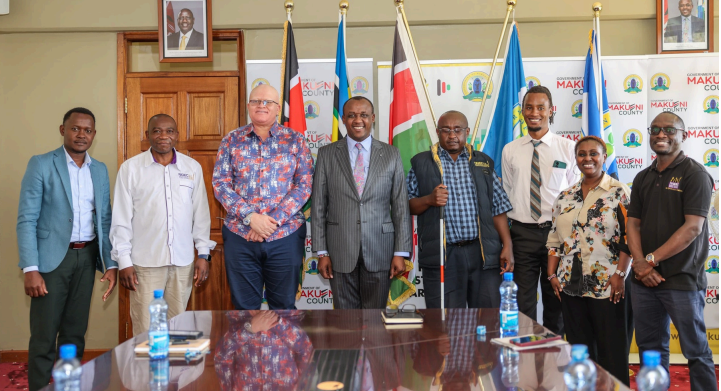
In Makueni County, Commissioner Mbithuka Nzomo led the NGEC team to Kyangela, Kyau, and AIC Mutulani Primary Schools as part of the ongoing nationwide research into barriers facing girls’ education. What emerged was a picture of the quiet but grinding inequalities of rural schooling. Teachers stretch themselves thin, classrooms remain under-resourced, and parents often go to great lengths to keep their daughters in school. Poverty and subtle social pressures continue to place girls at risk of dropping out, even in a county that is otherwise considered stable. Commissioner Nzomo used the visits to underline a core principle of the study: equal education cannot depend on geography or circumstance. Marginalization is not only found in regions affected by insecurity but also in rural schools where the struggles are less visible yet equally damaging. During the tour, an incident in Kilome brought these challenges into sharp focus. At Kiungwani Girls Secondary School, a Form Four candidate had been sent home last term after being found with three pieces of chewing gum in her pockets. The punishment went beyond discipline, as the principal demanded that the parent pay KSh 16,000 before the student could return. Commissioner Nzomo personally intervened, framing the case as a stark example of how disproportionate measures can derail a girl’s education at a critical moment. Her action underscored the wider purpose of NGEC’s research: to expose the hidden barriers—whether systemic, cultural, or administrative—that prevent girls from realizing their right to education. By engaging directly with school leadership and county officials, Commissioner Nzomo called for accountability and fairness, urging schools to exercise discipline in ways that do not compromise the educational future of learners. Makueni’s experience demonstrates that marginalization takes many forms, from chronic underfunding to punitive practices that hit vulnerable learners the hardest. The evidence gathered here will form part of the Commission’s broader push to ensure that Kenya builds an education system where every child, regardless of background, has the chance to learn and thrive.
Tharaka Nithi: CEO Purity Ngina Anchors Research in Inclusive Education
NGEC CEO Dr. Purity Ngina took the lead in Tharaka Nithi, visiting Chuka University’s Ndagani Model School, which houses a special unit for children with disabilities. Her focus was clear: education must be inclusive, leaving no learner behind, including those with disabilities. In a county where marginalization often takes the form of invisibility, Dr. Ngina emphasized that the study must shine a light on children who are too often excluded from mainstream narratives. Her articulation of the research objectives reminded stakeholders that girls with disabilities face double discrimination, and their experiences must be fully captured in the evidence being gathered.
Kwale: Community Voices Add Weight to Study
In Kwale County, the NGEC team began by engaging key education officers, including the County Director of Education and the Teachers Service Commission County Director. Parents, teachers, and school boards also shared insights at Mbuwani primary school and Pungu Primary School in Kinango. Their involvement underscored that girls’ education is a community responsibility, not only a policy debate. The Commission emphasized that data drawn from such diverse perspectives will help shape solutions that are both practical and rooted in local realities.
Tana River: Dust, Distance, and Determination
The Tana River team braved long distances and rough terrain to reach Chifiri Primary and Hola School for the Mentally Handicapped. Accompanied by county officials, they witnessed firsthand how education is challenged by poor infrastructure and harsh environmental conditions. Yet, even in these circumstances, teachers and learners continue to push forward. The Commission noted that gathering evidence from schools in such remote areas is crucial, as they often fall outside the spotlight of national attention but remain central to the promise of equality in education.
West Pokot: When Research Turns to Immersion
The West Pokot team’s visit to Kaibos Comprehensive School and Sla primary school took an unusual turn when tough terrain and food scarcity forced the team into ethnographic immersion, sampling wild fruits and herbs alongside the community. This moment reflected how research is not simply about data collection, but about understanding the lived experiences of marginalized learners. The Commission noted that the resilience of teachers and pupils in such environments is a vital part of the story that Kenya needs to confront.
Samburu: Leaders Speak Against Cultural Barriers
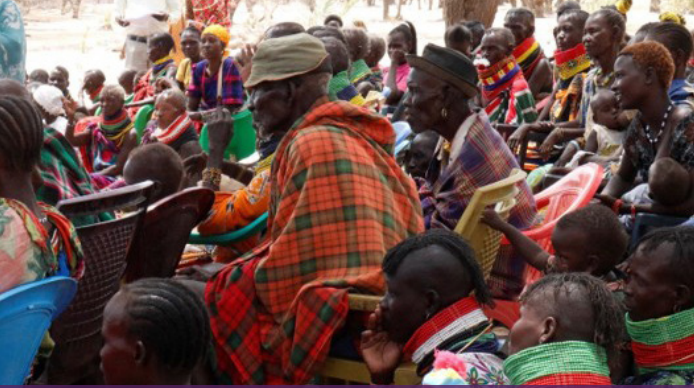
In Samburu County, NGEC worked closely with local leaders to gather insights at Lorosit and Lpartuk primary schools. The County Commissioner called for urgent action against female genital mutilation and teenage pregnancies, both identified as critical impediments to girls’ education. The Deputy Governor pledged county government support for inclusive, safe schooling. Samburu highlighted the need to confront deeply rooted cultural practices while strengthening formal education systems to give girls a fair chance.
Kitui: Rural Schools at the Edge of Opportunity
In Kitui, the NGEC team visited Mukundi and Nthilani primary schools engaging with , teachers, and local officials. The school’s modest infrastructure mirrored the quiet struggles of rural education, where girls often drop out due to poverty or domestic responsibilities. The Commission highlighted Kitui’s case as a reminder that marginalization is not always dramatic but can be deeply entrenched in everyday realities that require focused interventions.
Kilifi: Coastal Counties Share the Burden of Inequality
In Kilifi County, the Commission visited Watamu and Mashamba Primary Schools. Here, the interplay between poverty and early marriage emerged strongly as factors shaping girls’ education. Teachers and parents pointed to the risks of child labor in coastal economies, where tourism and informal industries compete with schooling. The Commission noted that Kilifi demonstrates how economic structures directly affect educational access and outcomes, particularly for girls.
Garissa: Schools Persevere Amid Fragile Stability
In Garissa County, the NGEC team toured Kazuko Girls Comprehensive, Bulla Nur, and Jambele Primary Schools, as well as Maalim Comprehensive in Modogashe. Data collection was observed in full swing, with research assistants embedded in classrooms and communities. In a region often affected by insecurity, these schools stand as pillars of resilience. The Commission stressed that Garissa’s experience reveals the fragility of education systems in areas where conflict and displacement remain ongoing concerns.
Mandera: Borderlands and the Education Divide
In Mandera, NGEC engaged county leadership and visited schools that sit at the crossroads of Kenya’s border with Somalia and Ethiopia. The county’s challenges are unique: long distances, entrenched poverty, and the constant shadow of insecurity. These conditions weigh heavily on girls, whose education is often sacrificed first. The Commission underlined that Mandera’s data will be critical in shaping policies for border counties, where marginalization takes multiple forms.
Wajir: Timely Study for a County in Transition
In Wajir, the NGEC team paid a courtesy call to the Deputy County Commissioner and the County Director of Education before visiting schools in Wajir East. Leaders welcomed the research as timely, noting that it will inform local efforts already underway to keep girls in school. Wajir’s story highlights how evidence can strengthen ongoing initiatives by giving policymakers reliable data to back their decisions.
Kajiado: Balancing Tradition and Education
The Commission’s visits to Oloserian and MCK Naika primary schools illustrated the delicate balance between tradition and modern education. Here, pastoralist culture often intersects with the classroom, creating barriers to regular attendance, especially for girls. Yet, there is growing recognition among parents and leaders that education is indispensable. The Commission stressed that understanding this cultural-educational tension is central to shaping interventions that are both respectful and effective.
Narok: Schools in the Shadow of Tradition
At Nkitintini Comprehensive Primary in Narok, the NGEC team met pupils whose schooling is frequently interrupted by pastoralist migration patterns and cultural practices. Early marriage remains a looming threat for girls. The Commission emphasized that Narok’s experience reflects the pressing need to align cultural shifts with educational progress, ensuring that no girl’s future is curtailed before it begins.
Nairobi: Control County Anchors the Study
Nairobi was included as a control county to help benchmark the data collected in marginalized regions. Schools here, while not free of challenges, generally benefit from better infrastructure, resources, and access to teachers. The Commission noted that using Nairobi as a comparative measure will highlight the stark differences in opportunity across the country. The contrast will strengthen the study’s credibility by grounding its findings in both extremes of Kenya’s education landscape.