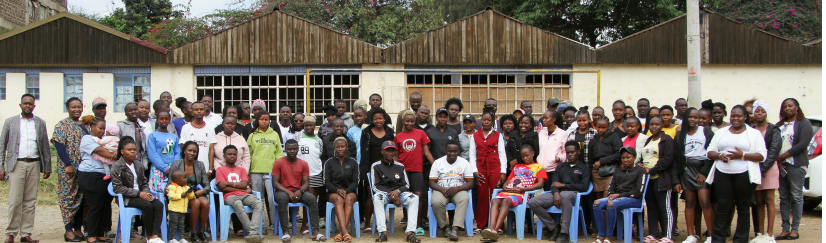
The National Gender and Equality Commission (NGEC) has taken its campaign against gender-based violence (GBV) and femicide to the heart of Nairobi’s informal settlements, convening young people in Mathare under the bold theme “Lead the Change: Youth Voices Against GBV & Femicide.” What unfolded was not just another community dialogue, but a powerful affirmation that the fight against violence must be shaped by those who live its consequences most directly.
The forum carried a raw honesty rarely heard in official gatherings. It broke GBV prevention down to its bare realities, weaving conversations around harmful cultural practices, sexual and reproductive health education, and the harsh truth that nearly half of Kenyan women—45 per cent—will experience GBV in their lifetime. For many of the young people present, these statistics were not mere numbers. They spoke to lived experiences: sisters who never returned home, classmates who dropped out of school after abuse, mothers trapped in cycles of violence, and friends lost to femicide.
The Commission’s deliberate decision to place youth at the centre of the conversation was more than symbolic. Too often, young people are invited to sit in the room, only to listen passively to lectures.
In Mathare, they were asked to lead. They set the agenda, chose the language, and offered solutions. In doing so, NGEC created a space of belonging—a safe, welcoming forum where voices usually silenced by stigma and fear could speak freely.
The choice of Mathare was significant. Informal settlements like this one remain at the frontline of Kenya’s GBV crisis. Poverty, overcrowding, unemployment, and fragile social structures provide fertile ground for abuse, while survivors struggle to access justice or support. Police posts are often ill equipped, courts are slow, and stigma weighs heavily on those who dare to report. By holding the forum here, NGEC underscored that the fight against GBV cannot remain confined to policy boardrooms or academic conferences—it must take root in the very places where violence is most pervasive.
Partnerships played a vital role in amplifying the Commission’s message. With support from the Hanns Seidel Foundation and the Women, Peace, Climate Resilience, and Justice Association, the initiative carried weight beyond words. Their collaboration demonstrated the strength of collective action, a reminder that ending GBV demands not one institution but an alliance of many.
What emerged from Mathare was a clear and urgent call for change. Youth demanded parental sensitisation programmes to challenge the attitudes that perpetuate violence. They called for gender-responsive leadership in schools and greater access to sexual and reproductive health education. Survivors asked for safe community spaces where they could seek help without fear of judgment. Young men, too, reflected on the pressures of patriarchal expectations and the silence that too often makes them complicit. The Commission’s intervention in Mathare was therefore as much about principle as it was about practice.