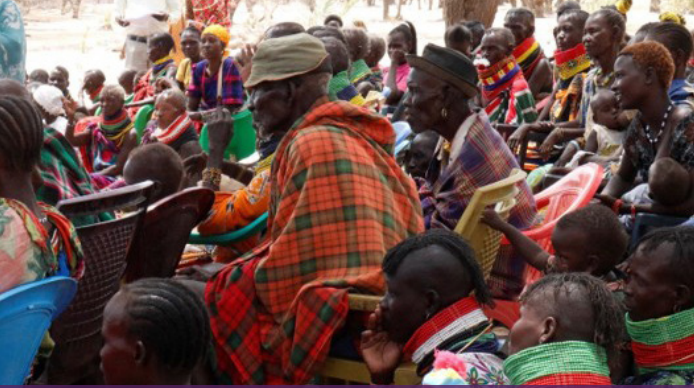
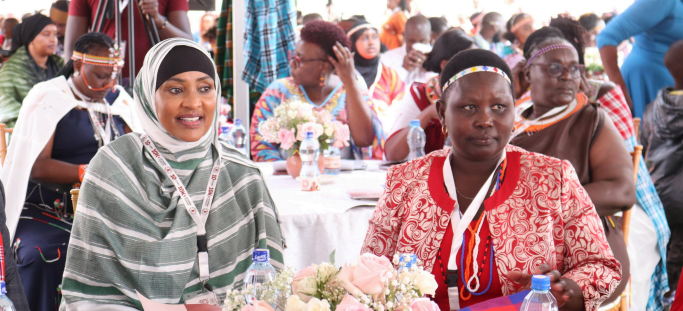
The Commission (NGEC) joined Indigenous women leaders, community champions and rights advocates in Laikipia County to mark the 10th anniversary of the Indigenous Women Council (IWC), an event that also coincided with the global commemoration of the International Day of the World’s Indigenous Peoples on 9th August 2025.
Hosted by the Samburu Women Trust under the theme “10 Years, 10,000+ Women Voices,” the celebration brought together voices from across Kenya to reflect on a decade of activism, policy engagement and leadership by Indigenous women. The Commission was represented by Chairperson Hon. Rehema Jaldesa and Commissioner Caroline Lentupuru, both of whom have deep roots in the pastoralist and Indigenous women’s movement.
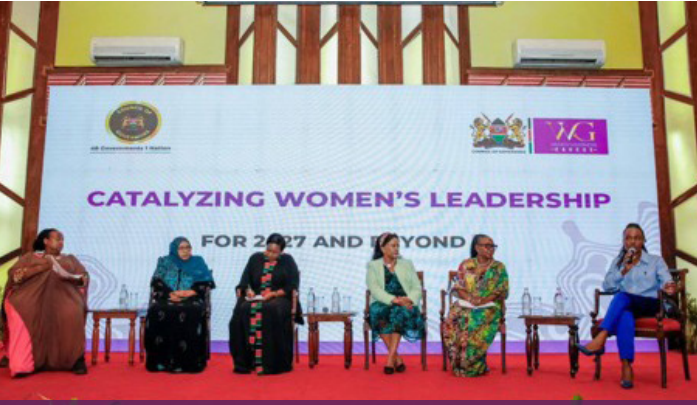
In her keynote address titled “A Decade of Courage: Indigenous Women and Girls Rising to Shape Policy and Influence Inclusion,” Hon. Jaldesa commended the courage and persistence of Indigenous women who have steadily made their way into spaces of power and decision-making. She noted that more Indigenous women today occupy senior leadership roles in government and civic life than ever before, a shift driven by sustained advocacy and greater political will to uphold equality and inclusion.
The Chairperson highlighted a notable policy achievement: the recent establishment of the Minority and Marginalised Affairs Unit under the Office of the President. This development followed an advisory by the Commission and represents a critical step toward implementing Article 56 of the Constitution, which calls for affirmative action measures to enhance the participation of marginalised groups in national development.
Alongside the celebrations, the Commission provided direct services to members of the public attending the event. These included free legal aid, a public complaints desk, and awareness forums on equality, nondiscrimination and access to justice. The outreach underscored NGEC’s continued commitment to bringing services closer to communities that are often overlooked in mainstream governance.
The timing of the celebrations offered an opportunity to reflect more broadly on the place of Indigenous communities in a rapidly evolving world, particularly in relation to digital transformation. This year’s International Day of the World’s Indigenous Peoples was marked under the theme “Indigenous Peoples and AI: Defending Rights, Shaping Futures,” a timely reminder of both the promise and the risk that emerging technologies hold for marginalised communities.
In its official statement on the Day, the Commission expressed concern that the benefits of Artificial Intelligence (AI) could bypass Indigenous groups if deliberate efforts are not made to include them. The Commission observed that while AI is reshaping key sectors such as education, health, agriculture and governance, it also introduces new forms of exclusion. These range from algorithmic bias and digital invisibility to surveillance, data exploitation and the erasure of Indigenous languages and traditional knowledge systems.
At the same time, the Commission noted that AI, when developed ethically and inclusively, has the potential to advance Indigenous rights. For example, local innovations such as the “Simba” chatbot, which interacts in Indigenous languages, and the “Namunyak” environmental monitoring app, developed with Samburu communities, show how technology can support cultural preservation and sustainable land use.
The Commission however cautioned that such progress must be grounded in community ~ participation, respect for Indigenous data sovereignty and adherence to principles of free, prior and informed consent. Kenya’s National AI Strategy (2025–2030) provides a foundation for this work, but implementation must be deliberate in addressing historic inequalities and ensuring that no community is left behind.
The Commission called for greater investment in digital infrastructure, innovation hubs and literacy programs that target Indigenous youth, women and persons with disabilities. It also urged faster action in finalising the national policy on ethnic minorities and marginalised communities, a key instrument for strengthening protections and promoting inclusive development.