At the 2025 Devolution Conference in Homa Bay County, the Commission (NGEC) carved out a strong presence, using every platform, from the plenary hall to side sessions, to press for deeper accountability on equality and inclusion within county governments. The Commission’s message was consistent: devolution has delivered real gains, but glaring gaps still threaten its promise for the most vulnerable.
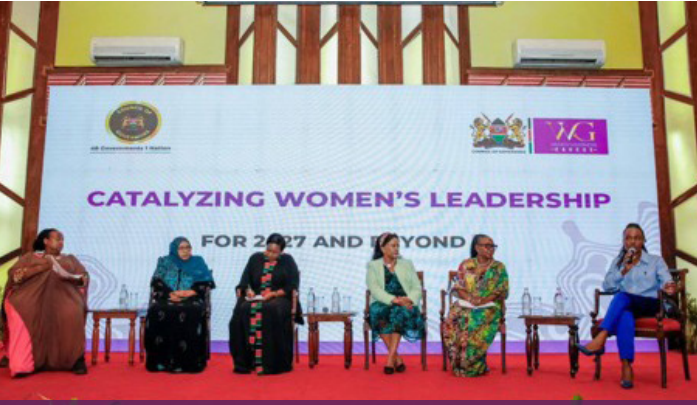
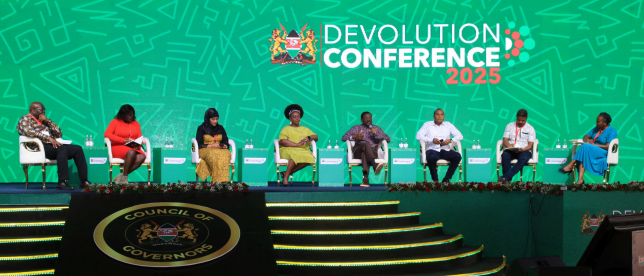
During a key session on human rights and social justice, NGEC Chairperson Hon. Rehema Jaldesa joined a highlevel panel that included Siaya Governor James Orengo, MP Millie Odhiambo, Senator Danson Mungatana, Hussein Khalid of VOCAL Africa, and Ruth Okul of Young Women Leaders Connect. The discussion focused on how counties are measuring up to the challenge of protecting rights and advancing social justice on the ground.
The Chairperson gave a pointed assessment of how far counties have come—and how far they still need to go. She focused on Article 10 of the Constitution, which commits all public institutions to uphold equity, inclusion, human dignity, and nondiscrimination. While some counties have embraced this mandate, the Chairperson noted that others are falling behind, especially when it comes to the representation of special interest groups (SIGs), access to services, and the resourcing of institutions tasked with advancing inclusion.
There are signs of progress. Women's presence in county assemblies has grown steadily, increasing from 82 MCAs in 2013 to 115 in 2022. However, leadership roles have declined. Only two counties had female Speakers in 2022, down from seven in 2017. Youth representation is also inching forward, though inconsistently. While more young people were elected as MCAs in 2022,the number of young women declined from 18 to 14. On disability, 21 counties still have no representation of persons with disabilities in their assemblies, a critical failure to meet inclusion standards.
In the executive, a few counties are setting the pace. Kiambu, Kilifi, and Kirinyaga have not only complied with the twothirds gender principle but have also assigned women to powerful dockets like finance and planning. On the other hand, some counties are still non-compliant, either because they have too few departments or are entangled in legal disputes.
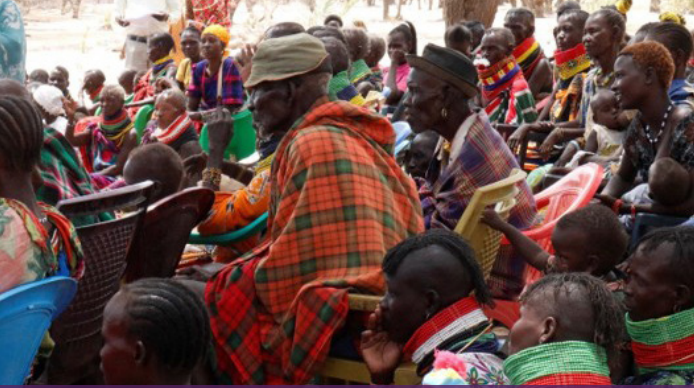
Access to basic services continues to reflect deep inequality. While nearly every household in Nairobi uses an improved source of water, in Kitui only 21 percent do. Urban households tend to live within a 30-minute walk of a water source, but in Samburu, only 29 percent have that -access. Health indicators like antenatal care and facility-based deliveries have improved overall, though counties such as Turkana, Tana River, and Mandera continue to lag behind.
Most counties now have at least one policy focused on SIGs, with Taita Taveta leading in this area. Still, the Chairperson warned that many of these policies are undermined by weak funding and limited institutional support.
To push counties toward compliance, NGEC has deployed a suite of tools. These include Equality and Inclusion Technical Working Groups, structured engagement platforms, policy support for county assemblies, and handbooks to guide MCAs.
The Usawa Awards, an annual county ranking based on performance in inclusion, have become a signature initiative. Nairobi topped the rankings in 2024.
Other support tools include guidelines on gender-responsive budgeting, model policies on gender-based violence, and standards for inclusion in vocational training institutions. NGEC is also piloting digital dashboards that allow the public to track how counties are performing on inclusion indicators. “Devolution was never about simply bringing government closer in distance. It was about bringing justice, inclusion, and accountability closer to the people,” Jaldesa said.
Looking ahead, the Commission is calling on counties to go beyond symbolic gestures. It wants concrete measures: increased representation of vulnerable groups, ring-fenced funding for SIG programs, enforceable county legislation, and robust GBV response systems. NGEC is also advocating for regular social audits and the expansion of safe spaces such as shelters for survivors.