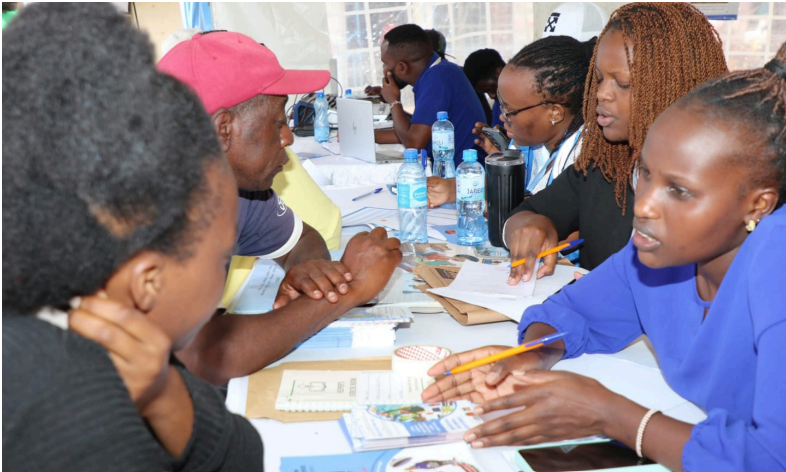
Efforts to bring legal and human rights services closer to communities were reinforced in Kajiado County during a Legal Aid Clinic held at Kiserian Market, bringing together key institutions involved in governance, equality and access to justice.
The outreach, organised in collaboration with the Commission on Administrative Justice and other stakeholders involved in legal aid and human rights protection, provided members of the public with an opportunity to seek assistance on a wide range of legal and equality concerns affecting communities. The engagement reflected growing efforts by public institutions to decentralise justice services and bring legal information closer to citizens, particularly vulnerable and marginalised populations who often face barriers in accessing formal justice systems.
Across Kenya, access to justice remains a constitutional right under Article 48 of the Constitution of Kenya, 2010. However, many citizens continue to face obstacles linked to legal costs, distance, lack of awareness and procedural complexity, especially in underserved communities.
The outreach placed particular emphasis on supporting vulnerable and marginalised populations, including women, persons with disabilities, older persons, low-income households and communities facing social exclusion.
Studies on access to justice in Kenya continue to show that vulnerable groups are disproportionately affected by barriers such as poverty, limited access to information and inadequate legal representation.
Stakeholders observed that such barriers often prevent affected individuals from pursuing justice or seeking protection when their rights are violated. The engagement highlighted the importance of ensuring that legal aid services are inclusive, accessible and responsive to the realities faced by different population groups.
The Kiserian Legal Aid Clinic brought together multiple institutions working in areas of legal services, governance and human rights protection. Stakeholders noted that collaborative approaches improve efficiency, strengthen referral systems and ensure that communities receive more coordinated support.
The engagement also highlighted the importance of partnerships in expanding outreach efforts and improving access to justice at the grassroots level. Participants emphasised that effective legal aid requires institutions to work together in responding to community concerns and strengthening trust in public systems.
The outreach reinforced the connection between access to justice and broader issues of equality, inclusion and human rights protection. Communities that lack access to legal support are often more vulnerable to discrimination, exclusion and abuse.
Stakeholders observed that strengthening legal awareness contributes to protection of constitutional rights and supports more inclusive governance systems. The engagement also reflected the broader role of legal aid in promoting dignity, accountability and equal treatment under the law. Kenya has continued to expand legal aid and community justice programmes aimed at improving access to services for underserved populations. The National Legal Aid Service and other institutions have increasingly promoted community-based legal outreach initiatives to ensure that legal support reaches citizens at grassroots level.
These efforts align with broader national objectives of strengthening rule of law, protecting human rights and promoting equitable access to justice for all. The Legal Aid Clinic held at Kiserian Market highlighted the growing importance of grassroots outreach initiatives in strengthening access to justice and public awareness on rights and equality. By bringing legal and human rights services directly into communities, the engagement helped reduce barriers that often prevent vulnerable populations from accessing support and protection.
Stakeholders emphasised that improving access to justice requires sustained public engagement, coordinated institutional support and systems that are responsive to the needs of all citizens.
The outreach reinforced a broader national commitment to ensuring that justice is not limited by geography, income or social status, but remains accessible, inclusive and responsive to every Kenyan.