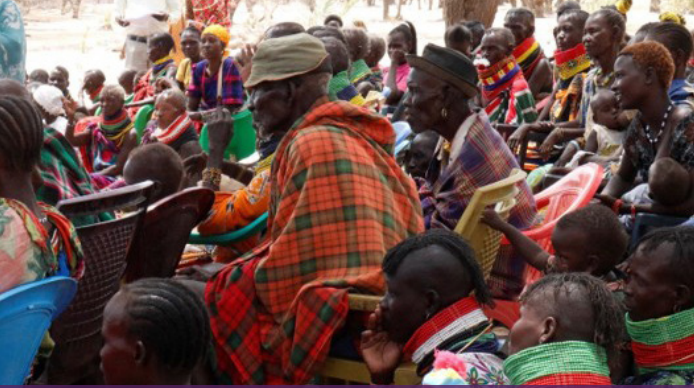
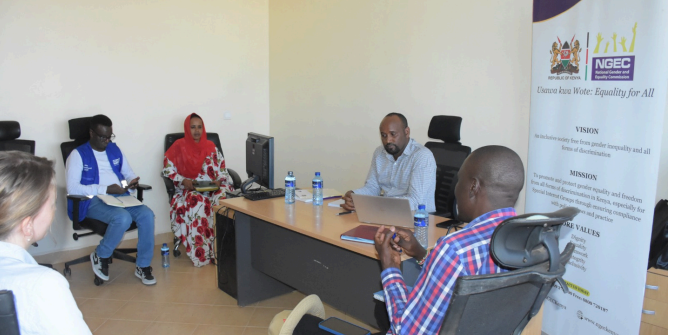
In the arid plains of Isiolo, where pastoral routes cut across borders and cultures mingle under the same unforgiving sun, a quiet but urgent conversation unfolded one that stretched far beyond county lines and national flags. Delegates from Kenya, Somalia and Ethiopia gathered in the frontier town not for diplomacy or trade, but to confront a common crisis that has scarred homes, silenced survivors and stolen futures across the Horn of Africa: gender-based violence.
The meeting, hosted by the Commission’s Isiolo Regional Office in partnership with Plan International Kenya, brought together implementers of the Horn of Africa Project on the Prevention and Response to GenderBased Violence.
It was more than a routine technical review. It was a rare cross-border moment of reflection, learning and resolve in a region where violence against women and girls remains both widespread and under-reported.
Across East and Southern Africa, the statistics paint a grim picture. Globally, one in three women experiences physical or sexual violence in her lifetime, a violation that cuts across age, culture and geography. In sub-Saharan Africa, nearly 45 per cent of women report having experienced at least one form of gender-based violence, with young women in rural areas facing some of the highest risks.
During the Isiolo engagement, delegations reviewed project progress, exchanged cross-border lessons and examined the realities faced by survivors in pastoral and border communities. Discussions focused on strengthening referral systems, harmonising survivor-centred approaches and tackling the root causes of violence, including entrenched social norms, poverty and conflict.
Participants noted that mobility across borders often complicates access to justice and services. Survivors may flee from one country to another, only to encounter fragmented legal systems, language barriers and limited support networks. This reality, they agreed, demands coordinated regional solutions rather than isolated national responses.
The Commission’s technical support was recognised as a key pillar in building structured, accountable and survivor-centred protection systems. Through its regional presence, the Commission has worked to strengthen coordination among duty bearers, support policy alignment and ensure that gender equality remains central to development and governance efforts. The Isiolo meeting emphasised that no single institution or country can tackle gender-based violence alone. Cross-border learning, shared protocols and coordinated interventions were identified as essential to building effective protection systems.
Delegates highlighted the importance of investing in prevention, strengthening legal frameworks, and ensuring that survivors can access services regardless of where they cross a border. They also stressed the need to address emerging threats, including digital violence and trafficking along migration routes.
For the Horn of Africa, the path to peace and development may well begin with a simple, urgent truth: a region cannot prosper while its women and girls live in fear.