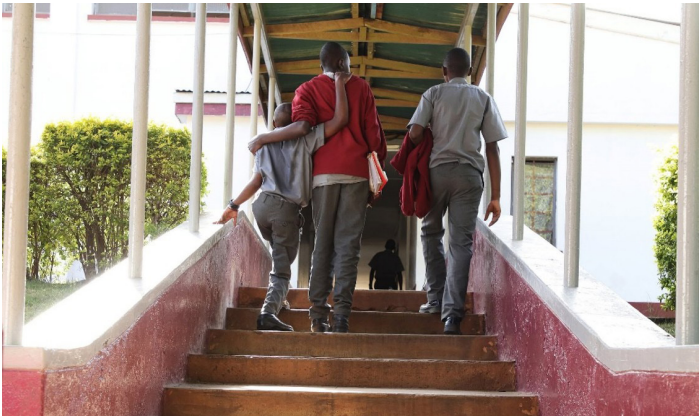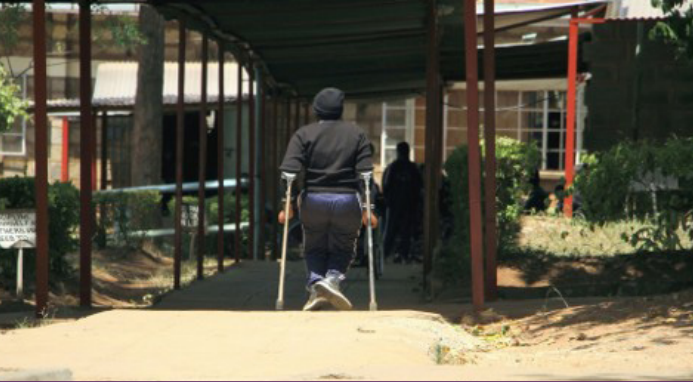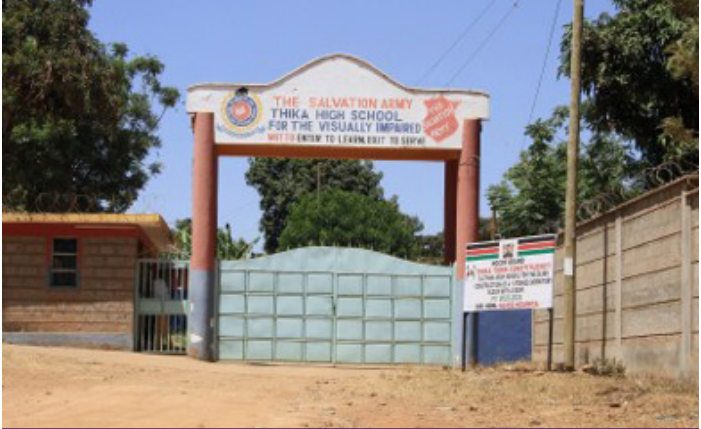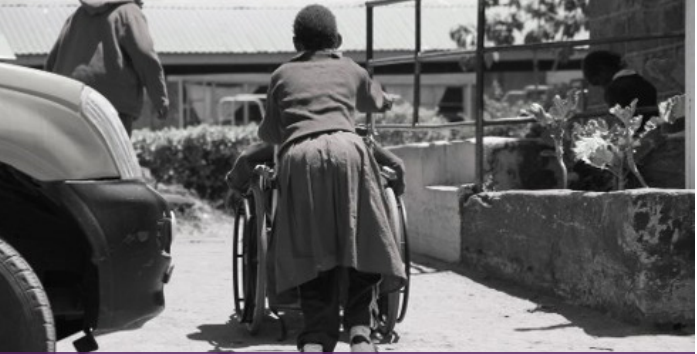
As Kenya examines a record 3,634,846 candidates, the National Gender and Equality Commission is asking whether Competency-Based Education reaches every learner, starting with learners with disabilities entering senior school.
According to the Kenya National Examinations Council (KNEC), 1,380,463 learners registered for the Kenya Primary School Education Assessment (KPSEA) and 1,206,028 for the Kenya Junior School Education Assessment (KJSEA), which ran from 26 to 30 October. The Kenya Certificate of Secondary Education (KCSE) has 1,048,355 candidates, the first time KCSE candidature has crossed one million. Written KCSE papers run from 2 to 20 November.
The Grade 9 learners who sat this year’s KJSEA form the second cohort to move into senior school under the new structure. The first cohort, 1,130,459 learners, reported to Grade 10 on 12 January 2026.
FROM LENANA OUTWARD
Within days of that first reporting, the Commission was at Lenana School, where 118 learners with diverse disabilities had been placed in a school without the facilities and specialised staff to support them.
The Commission then assessed seven public schools in Nairobi and Kiambu Counties between 28 and 30 January 2026.
"With the next cohort preparing to join senior school, the time to act is now.” Hon. Rehema Jaldesa, Chairperson, National Gender and Equality Commission
Its report, Reimagining Inclusive Education under the Competency-Based Education Framework, published in October 2026, is the centrepiece of this edition. It examines how learners with disabilities were placed and admitted, how accessible the receiving schools are, and who supports learners once they arrive. Edition 46 reads the report alongside two other Commission studies: Teachers of Kenya, the audit of the teaching workforce conducted jointly with the Teachers Service Commission, and the 2025 study of school-level factors affecting girls’ access to quality education in 19 marginalised counties. Together they show who teaches, who leads, who is admitted and who is supported.
GROUNDED IN LAW
The Commission’s work in education rests on Article 27 of the Constitution, which prohibits discrimination on any ground including disability, and Article 54, which entitles persons with disabilities to access educational institutions. Section 8(m) of the National Gender and Equality Commission Act requires the Commission to audit the status of special interest groups, including persons with disabilities and children.
The Persons with Disabilities Act, 2025 adds force. Section 20 gives every learner with a disability the right to admission, assessment and placement in an appropriate institution, and makes denial of admission on the basis of disability an offence.
This edition carries the assessment’s findings, a comparison of special and mainstream schools, the missing assessment reports, the position of girls with disabilities, and the appointment of the Commission Secretary/CEO to the national task team on school unrest. It then follows disability inclusion beyond the classroom, the Commission’s work on children’s rights and access to justice, and its engagements on women in trade and biodiversity.