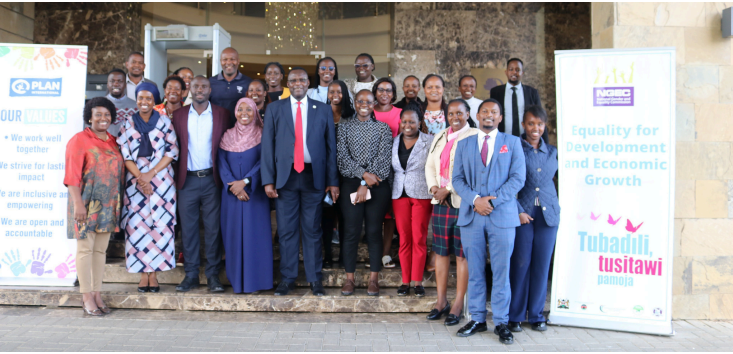
A three-day Children Coordination Meeting convened by the National Gender and Equality Commission (NGEC) in collaboration with Plan International Kenya and key stakeholders has marked a significant step toward the development of minimum standards for Child-Responsive Budgeting (CRB) in Kenya. The engagement brought together actors working on children’s issues to strengthen how government planning and budgeting processes integrate children’s rights, needs and priorities across sectors.
A key outcome of the meeting was the development of the first draft Child-Responsive Budgeting checklist, designed to guide institutions in planning, allocating and tracking public resources for children in a more structured and accountable manner. The coordination meeting focused on advancing Child-Responsive Budgeting as a practical approach to ensure that public financial management systems reflect the realities and needs of children.
Participants worked on developing minimum standards that can be applied across government institutions to improve consistency in how resources are allocated for child-focused programmes.
The discussions emphasised the importance of aligning budgeting processes with children’s rights frameworks, while ensuring that planning and expenditure decisions are informed by reliable evidence on children’s needs across different sectors.
The engagement also highlighted the need for stronger coordination among institutions responsible for child welfare, protection, education, health and social services. A key milestone of the meeting was the formulation of the first draft Child-Responsive Budgeting checklist.
The tool is designed to guide government institutions in assessing whether their budgeting processes adequately consider the needs and rights of children at all stages of planning, allocation, implementation and monitoring.
It aims to strengthen transparency and accountability by providing a structured framework for tracking whether resources intended for children are effectively planned and utilised. Stakeholders noted that the checklist will also help identify gaps in current budgeting practices and provide a basis for improving policy and programme design.
Participants emphasised that child-responsive budgeting must be grounded in evidence-based planning that reflects the real conditions affecting children across the country. The discussions highlighted the need for improved data collection and analysis to inform resource allocation decisions affecting children’s services and welfare.
Stakeholders noted that inclusive budgeting processes should take into account disparities affecting children in different contexts, including those in marginalised communities and vulnerable situations.
The engagement underscored that planning and budgeting systems must move beyond general allocations to more targeted and responsive approaches that address specific child-related needs.
A key focus of the discussions was the need to strengthen mechanisms for tracking how public resources allocated for children are used.
Participants noted that improved monitoring systems are essential for ensuring that budgeted funds translate into effective service delivery and measurable outcomes for children. The checklist is expected to support institutions in improving oversight and ensuring that child-focused programmes are implemented as intended.
Stakeholders also highlighted the importance of transparency in budgeting processes to enhance public trust and accountability. The coordination meeting brought together government institutions, development partners and organisations working on child rights and welfare.
The collaboration between NGEC, Plan International Kenya and other stakeholders was identified as critical in advancing childresponsive budgeting reforms. Participants reaffirmed their commitment to strengthening partnerships aimed at improving planning and budgeting systems to better reflect children’s needs.
The engagement also provided a platform for sharing experiences and aligning approaches to ensure coherence in child-focused interventions.
Through its involvement in the Child-Responsive Budgeting initiative, the Commission is working to ensure that public resource allocation processes are aligned with constitutional and policy commitments on children’s rights and welfare.