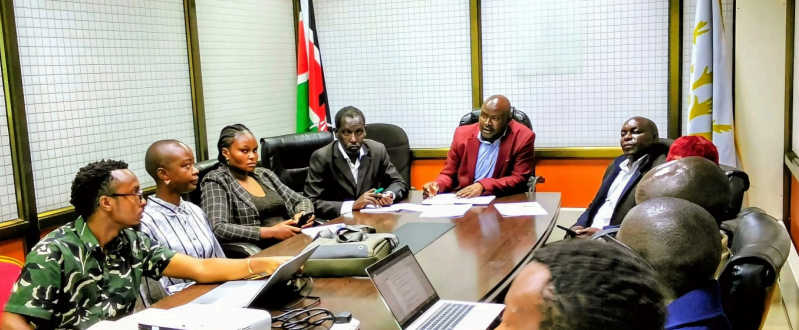
Ahead of the International Day of Families, the National Gender and Equality Commission (NGEC) convened a strategic planning meeting bringing together key partners to coordinate activities and strengthen collaboration toward a unified national commemoration.
The engagement focused on aligning stakeholders around programmes that promote wellbeing, inclusion, peacebuilding and social cohesion, while reinforcing the role of families and support systems in addressing emerging social and economic challenges.
The meeting underscored the central role of families as foundational units of society, responsible for supporting wellbeing, socialisation, protection and care across generations.
Globally, the International Day of Families—proclaimed by the United Nations in 1993—is observed annually on 15 May to raise awareness of social, economic and demographic issues affecting families and to strengthen policy responses. Participants noted that families play a critical role in shaping social values, providing emotional and economic support, and contributing to stable and cohesive communities. Evidence consistently shows that strong family and community support systems are associated with improved mental health outcomes, better child development indicators and stronger social resilience.
In Kenya, national engagements around the observance have continued to emphasise the importance of family structures in fostering safe, caring and inclusive societies, particularly in the face of changing socio-economic dynamics. Discussions during the planning meeting emphasised the need to recognise the diversity of family structures and lived experiences across the country.
Participants highlighted that contemporary Kenyan society includes a wide range of family forms, including single-parent households, extended families, childheaded households and grandparent-led homes, all of which require inclusive policy and support frameworks. Stakeholders stressed that effective interventions must be grounded in these realities to ensure that no family structure is excluded from access to services, protection mechanisms and development opportunities. The meeting also reinforced the importance of inclusive support systems that respond to intersecting vulnerabilities linked to gender, age, disability and socio-economic status.
The engagement took place against a backdrop of increasing economic pressures, social transformation and evolving challenges affecting households across the country. Stakeholders noted that many families continue to face rising costs of living, limited access to essential services and changing social dynamics that affect stability and wellbeing.
Recent national discourse ahead of the International Day of Families has highlighted concerns around economic strain, access to healthcare, and the need for stronger social protection systems to support families, particularly vulnerable households. Participants emphasised that coordinated and inclusive policy responses are necessary to address these challenges and to ensure that families remain resilient in the face of change.
The meeting focused on developing impactful activities for the national commemoration, with particular emphasis on peacebuilding, intergenerational support, inclusion and shared responsibility. Planned initiatives will aim to strengthen community engagement, promote dialogue across generations and reinforce social values that support coexistence, dignity and mutual respect. Participants noted that strengthening intergenerational connections is critical in preserving cultural values, supporting youth development and enhancing community cohesion.
The discussions also highlighted the importance of creating safe and inclusive spaces for children, young people and vulnerable groups as part of broader efforts to strengthen protection systems. The planning process is being led by International Family Pageant Global Advocates of Peace Kenya, in collaboration with NGEC and other partners working in areas of social development, human rights and community empowerment.
Stakeholders emphasised that partnerships are essential in ensuring that commemoration activities are impactful, coordinated and reflective of national priorities. The engagement highlighted the importance of multi-sectoral collaboration in addressing complex social issues affecting families, including inequality, exclusion and limited access to services. The Commission continues to play a central role in promoting equality, inclusion and non-discrimination, particularly for Special Interest Groups including women, youth, persons with disabilities, children, older persons and marginalised communities.
Through its involvement in the IDF planning process, the Commission seeks to ensure that national efforts are aligned with constitutional principles of equality, dignity and social justice.