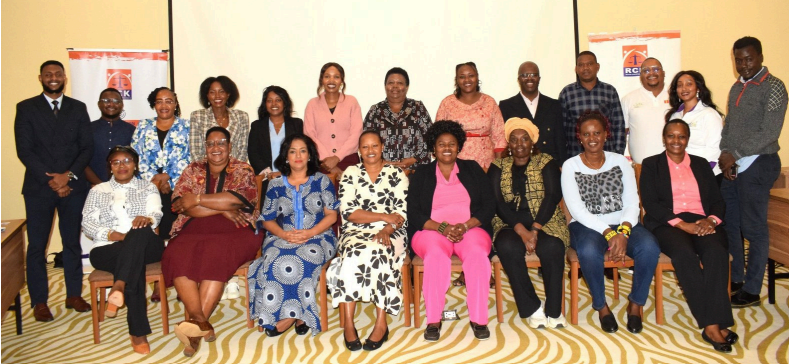
Despite significant progress in strengthening Kenya's legal framework on Gender-Based Violence (GBV), survivors continue to encounter barriers that delay justice, limit access to essential support services and undermine effective protection. These implementation challenges formed the focus of a high-level legislative advocacy dialogue convened by the Kenya Women Parliamentary Association (KEWOPA), bringing together women legislators, constitutional commissions, justice sector institutions, refugee protection agencies and development partners to examine reforms needed to strengthen the country's response to Sexual and Gender-Based Violence (SGBV).
The dialogue comes at a critical moment as Kenya continues to intensify efforts to combat Gender-Based Violence and femicide while strengthening institutional accountability across the justice, health, security and social protection sectors. Increasing attention is also being directed towards ensuring that national protection systems adequately respond to the unique vulnerabilities experienced by refugees, asylum seekers and host communities, where displacement, economic hardship and limited access to services can heighten protection risks.
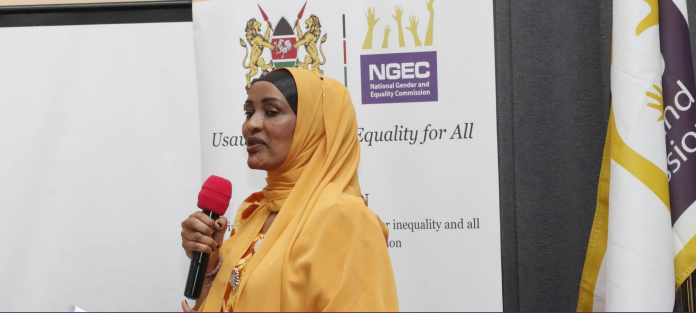
Representing the National Gender and Equality Commission, Nancy Mwangi led discussions on Kenya's legislative and policy architecture governing the prevention and response to SGBV.
The presentation examined key legal instruments, including the Sexual Offences Act, 2006, the Prohibition of Female Genital Mutilation Act, 2011, the Refugees Act, 2021, and the National Policy on Gender and Development, highlighting their role in protecting survivors, promoting equality and strengthening institutional accountability.
The engagement recognised that Kenya has established one of the region's most comprehensive legal frameworks for addressing Gender-Based Violence. Over the past two decades, Parliament has enacted legislation aimed at criminalising sexual offences, prohibiting harmful cultural practices, strengthening victim protection and safeguarding the rights of vulnerable populations. Complemented by constitutional guarantees under the Constitution of Kenya, 2010, these laws provide a strong legal foundation for advancing equality, human dignity and freedom from discrimination.
However, the dialogue emphasised that legislation alone cannot guarantee protection unless it is matched by effective implementation, adequate resources and coordinated institutional action. Participants observed that many survivors continue to face practical barriers when seeking justice, including delays in investigations and prosecution, limited forensic capacity, inadequate psychosocial and legal support services, insufficient survivor shelters, documentation challenges affecting refugees and other vulnerable populations, and lengthy judicial processes that may discourage reporting or prolong trauma.
The discussions also examined the specific protection challenges affecting refugeehosting areas, where humanitarian needs often intersect with broader development and governance issues. Participants noted that effective SGBV responses must recognise the shared realities of both refugee and host communities by promoting inclusive protection systems, strengthening social cohesion and ensuring equitable access to justice and essential services.
Beyond examining existing legislation, the dialogue explored opportunities to strengthen institutional coordination across government agencies, Parliament, constitutional commissions, humanitarian organisations and development partners. Particular emphasis was placed on improving referral systems, enhancing evidence collection, strengthening survivor-centred approaches within the criminal justice system and expanding community awareness on prevention, reporting and available protection mechanisms.
The forum further recognised the growing importance of adopting integrated approaches that link legal protection with healthcare, psychosocial support, economic empowerment and community-based prevention initiatives.
The forum further recognised the growing importance of adopting integrated approaches that link legal protection with healthcare, psychosocial support, economic empowerment and community-based prevention initiatives.
Strengthening data collection, research and monitoring was identified as critical for measuring progress and informing future reforms.