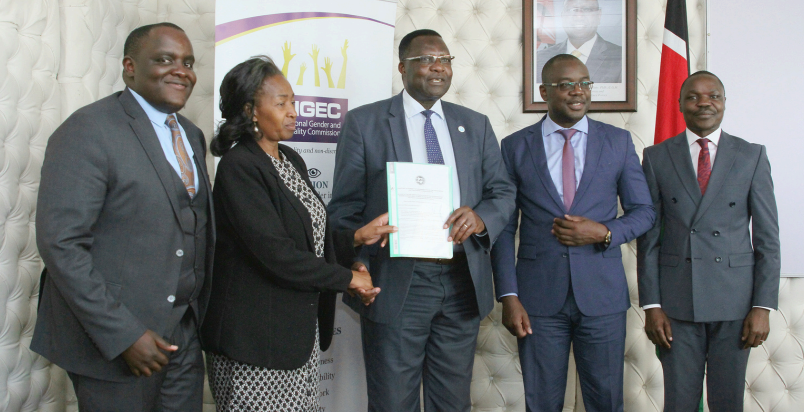
Nairobi, Kenya — The National Gender and Equality Commission (NGEC) hosted the Committee overseeing the implementation of Kenya’s landmark 10-Point Agenda, a roadmap born from the March 2025 UDA–ODM National Dialogue Agreement. The high-level engagement underscored a shared commitment to translating dialogue into actionable reforms, with inclusivity and citizen-centered outcomes at its heart.
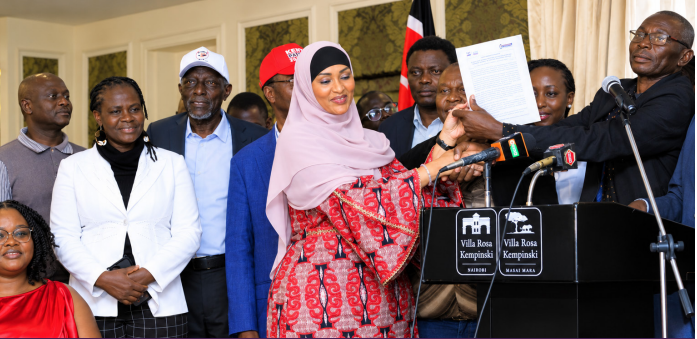
The Committee, chaired by former Nominated Senator Hon. Agnes Zani and comprising Hon. Fatuma Ibrahim, Mr. Kevin Kiarie, Mr. Gabriel Oguda, and Mr. Javas Bigambo, brings together an extraordinary breadth of experience across public policy, governance, civil engagement, and reform oversight. Tasked with tracking progress on key national priorities including youth livelihoods, public debt management, corruption, social cohesion, and inclusivity—the Committee has positioned itself as a pivotal bridge between national dialogue, accountability, and the execution of reforms.
During the visit, the Commission commended the Committee’s consultative approach, its commitment to evidence-based engagement, and its unwavering focus on delivering results that directly impact citizens’ lives.
NGEC highlighted the importance of structured reporting, noting the Committee’s bimonthly submissions to H.E. the President and the late Rt. Hon. Raila Odinga, alongside a clear roadmap for the final report due in March 2026. This disciplined framework demonstrates a rigorous,results-oriented process designed to ensure accountability and tangible development gains.
The discussions were wide-ranging, encompassing both achievements and persistent systemic challenges. NGEC presented progress in advancing equality and freedom from discrimination, with particular emphasis on women, youth, persons with disabilities, minorities, and other marginalised groups. Yet, the conversation also acknowledged gaps between policy commitments and their practical implementation, barriers to meaningful civic participation, and the pressing need for improved coordination among institutions.
Grounding these deliberations in robust data, lived experiences, and institutional knowledge, NGEC offered pragmatic recommendations aimed at enhancing policy coherence and strengthening oversight mechanisms under the 10-Point Agenda. The Commission emphasized that only through targeted, evidence-driven interventions can reforms yield measurable improvements in citizens’ quality of life.
The engagement reaffirmed the critical importance of sustained collaboration among oversight bodies, State institutions, and social partners. Both NGEC and the Committee emphasized that translating the vision of national dialogue into actionable development requires structured dialogue, mutual respect, and a steadfast commitment to inclusivity.
“Real progress is not measured solely by policies on paper but by the extent to which every Kenyan especially the historically marginalised—feels the benefits of reform,” noted one Commission official. The Committee echoed this sentiment, highlighting the need for persistent engagement with communities to ensure that the 10-Point Agenda delivers equitable outcomes across regions and demographics.
As Kenya navigates its post-dialogue reform landscape, the NGEC-Committee engagement signals a new chapter in participatory governance one where policy, accountability, and citizen experience intersect. Through collaboration, evidence-based oversight, and a focus on inclusivity, the dialogue moves beyond rhetoric, promising a Kenya where development is not just declared but genuinely felt.