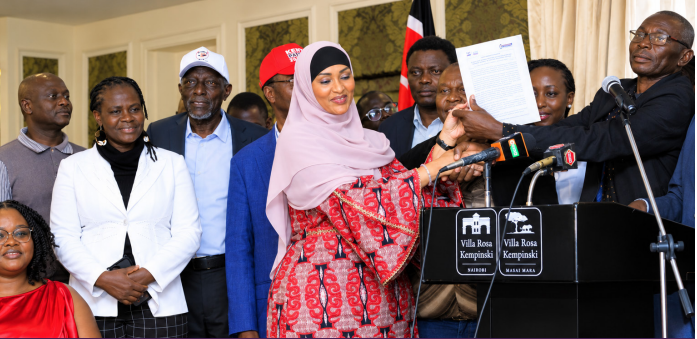
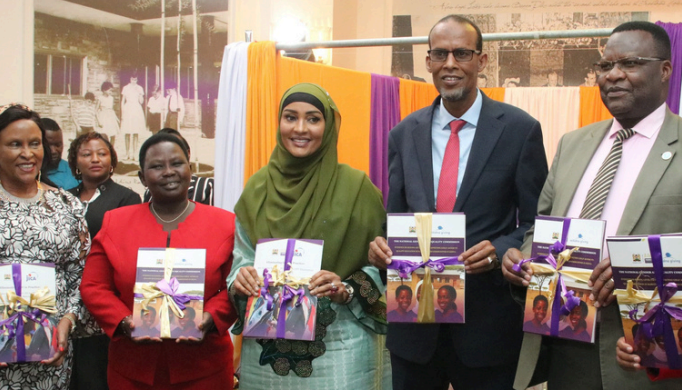
The National Gender and Equality Commission (NGEC) officially launched four groundbreaking reports this week, shedding light on the persistent barriers facing girls and other marginalized groups in Kenya. The flagship study, Evidence on School-Level Factors Affecting Girls’ Access to Quality Education in Marginalised Communities, presents a compelling, data-driven portrait of the educational landscape in Kenya’s most disadvantaged regions.
The event, held at NGEC headquarters in Nairobi, drew leaders committed to leveraging credible data to strengthen national systems. The reports collectively fall under two critical themes: Education and Protection, and Research and Green Transitions. Each study illuminates the intersections between institutional structures, societal norms, and emerging opportunities, offering actionable insights for government, civil society, and development partners.
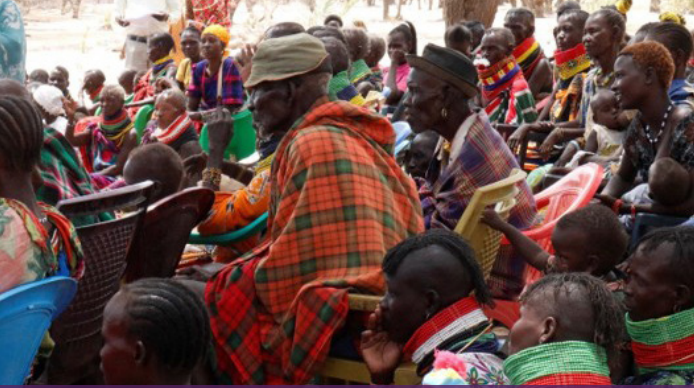
The Education Status Report 2025 paints a stark picture of gender disparities across Kenya’s arid and semi-arid lands (ASALs), informal urban settlements, and isolated regions. While national enrolment rates for girls have risen, structural, socio-cultural, and economic barriers continue to hinder their full participation.
The data reveal persistent gaps: 76% of school headteachers are male, and only 24% are female, with minimal female representation in governance structures such as Boards of Management (20%) and Parents–Teachers Associations (25%). This imbalance is particularly pronounced in northern frontier counties such as Wajir and Mandera, where cultural constraints and relocation challenges limit women’s progression to leadership. In contrast, Nairobi’s informal settlements show promising trends, with women occupying 89% of headships in surveyed schools.
Beyond leadership, physical and social infrastructure remains inadequate. Less than 30% of schools in ASAL counties have disability-accessible toilets, while menstrual hygiene-related absenteeism averages 10.9%. Teenage pregnancy affects 30% of schools surveyed, compounding the risk of early dropouts. Overcrowding is a persistent issue, with class sizes reaching 63 students in Mandera and 50 in Nairobi’s informal settlements.
The report highlights the vital role of teachers, noting near gender balance nationally—52% male, 48% female—but with significant regional disparities. Teacher shortages, particularly in ASAL counties, impede effective Competency Based Education (CBE) implementation, while limited training in digital literacy and special needs education constrains inclusion.
Beyond the Classroom: Social Barriers and Harmful Practices
Education alone does not dismantle inequality. NGEC’s research underscores the profound influence of social norms, child marriage, female genital mutilation (FGM), and gender-based violence (GBV) on girls’ schooling. Schools in marginalised communities are often illequipped to respond to these challenges, with minimal access to counseling, health services, or community support.
The NGEC–JICA collaboration, Eliminating GBV in Practice: Key Insights from the NGEC–JICA GBV Elimination Project in Kenya, presents concrete models for prevention and intervention, emphasizing multi-sectoral engagement and community-driven solutions. These initiatives offer replicable frameworks for protecting girls and women, reinforcing that education and safety are inseparable in the pursuit of equality.
Green Horizons: Inclusion in Emerging Sectors
The fourth report, Mainstreaming Equality and Inclusion in Green Energy (MEIGE), shifts focus to the uptake of renewable energy technologies among Special Interest Groups (SIGs), including women, youth, and persons with disabilities. While Kenya pursues ambitious clean-energy goals, the report finds that barriers such as affordability, lack of targeted training, and cultural exclusion prevent full participation by marginalized populations. NGEC recommends inclusive policy design and community-based interventions to ensure equitable access to emerging economic opportunities.
Taken together, the reports offer a comprehensive roadmap for change. They provide data-driven evidence to guide policy reforms, strengthen school governance, address social inequalities, and promote inclusive participation in emerging sectors. NGEC Chairperson Hon. Rehema Jaldesa, in her foreword, emphasized that education is not only a human right but the cornerstone of inclusive national transformation.
“Addressing barriers faced by girls in marginalised communities requires coordinated, evidence-based interventions,” she said. “These reports equip policymakers, educators, and development partners with the knowledge needed to ensure no girl, no child, and no marginalized group is left behind.”
NGEC Commission Secretary Dr. Purity Ngina highlighted the reports’ significance in tracking progress against Kenya’s Vision 2030, the Sustainable Development Goals (SDGs), and Africa’s Agenda 2063. She called on government institutions, civil society, and international partners to harness these insights to implement inclusive, practical, and sustainable solutions.
The NGEC’s comprehensive analysis confirms that structural, socio-cultural, and economic factors are intertwined, shaping the lived realities of Kenya’s most marginalized girls. Policy recommendations stress inclusive leadership, investment in teacher capacity, improved school infrastructure, and targeted social interventions
As Kenya moves toward its national and international development commitments, the findings illuminate a clear message: closing the gender gap in education is not optional it is essential for sustainable development, social cohesion, and equality.
With evidence now firmly in hand, the challenge remains translating insight into action. For girls in Kenya’s marginalized communities, the stakes could not be higher: education is the bridge between their present constraints and a future brimming with opportunity
The launch also recognised trailblazers in the fight for educational equity. Dr. John Mugo, Executive Director of Zizi Afrique Foundation, received special acknowledgement from NGEC for his dedication to improving learning outcomes for vulnerable children, a testament to the power of evidence-driven advocacy.